The Legacy of the Road Horse: Built for Endurance and Temperament
Critical Insight: The Standardbred Was Selected for Usable Qualities
Critical Insight: A good Standardbred brings three traits many riders spend years trying to create: a calm demeanor, physical durability, and a practical willingness to adapt. Those qualities did not appear by accident. They came from a breed culture that valued timed performance, efficient movement, and steady handling over ornament.
The Standardbred story starts in 19th-century America, where road horses needed to cover ground with speed, composure, and enough stamina to remain useful after the trip. The breed’s most famous foundation sire, Hambletonian 10, shaped that direction through descendants known for trotting ability, trainability, and muscular efficiency.
The registry standard set a hard filter: a horse had to trot a mile in the historical benchmark of 2 minutes and 30 seconds to be registered. That requirement did more than reward speed. It pushed breeders toward horses with lung capacity, stride efficiency, clean limbs, and minds that could repeat work without becoming brittle.
That history matters when evaluating a Standardbred as a riding partner. A horse bred to work in harness needed to accept pressure from the bit, noise from the road, another horse nearby, and a human giving precise direction from behind. Those same traits transfer well into pleasure riding when the transition program respects the horse’s prior education.
Breed resources and member programs often focus on this exact bridge between history and modern use. The Standardbred is not a novelty mount pulled from an unrelated job. It is a road horse with generations of selection behind its body and mind.
The Ultimate Desensitization: Why Track Experience Matters
The Track Produces a Different Kind of Confidence
A harness racing track is not quiet training ground. Diesel water trucks pass close to the rail. Starting gate wings unfold and rattle. Tractors drag the surface. Horses jog in tight quarters while drivers call, wheels hum, and public-address systems cut through the air.
Young Standardbreds learn this before most pleasure horses have seen a busy show warm-up ring.
Track conditioning routinely places yearlings near diesel water trucks and starting gate machinery operating within approximately 15 to 20 feet of the rail. Trainers often move them from quiet paddocks to the inner rail during active maintenance, where they can process the sound and motion while still contained and handled. This is not casual exposure. It is structured sensory schooling built into the horse’s early working life.
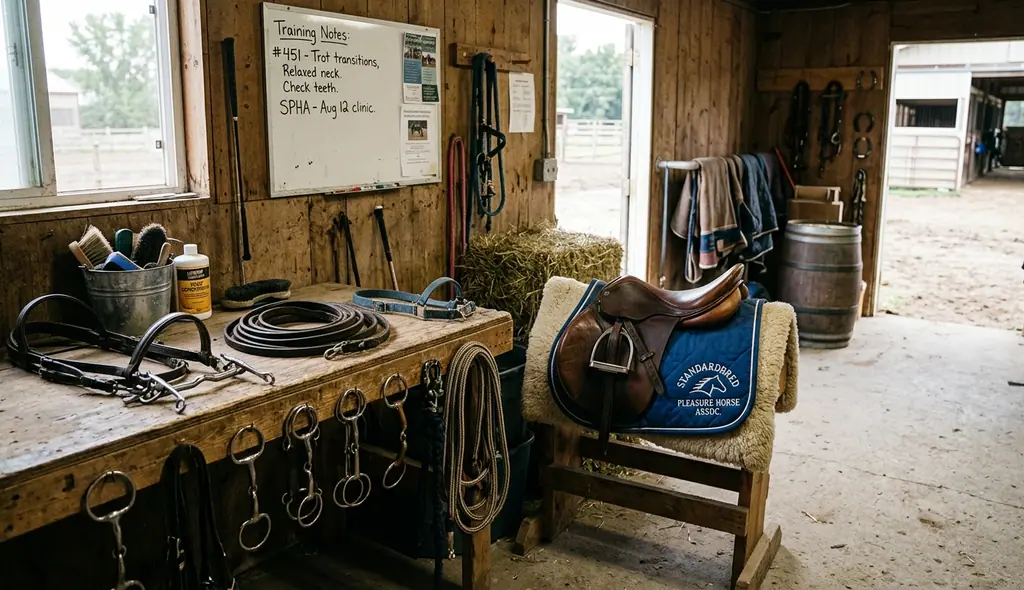
Bombproof Is Earned Through Repetition
The word “bombproof” gets used too loosely in horse ads, but a well-handled Standardbred often deserves the reputation more than most. A horse that has watched tractors, gates, trucks, jog carts, and other horses move in close formation has already solved many of the problems that make trail horses spin or brace.
Consider a trail gate that clanks in the wind. Many green riding horses treat the sound as a new threat. A retired racer may register it, pause, and wait for direction because the track has already taught the horse that machinery and noise are part of the working environment.
That does not erase the need for equine care and retraining. It changes the starting point. The handler is often refining a horse that already understands human routines rather than installing basic emotional control from scratch.
The Work Ethic Is a Handling Trait, Not a Slogan
Harness trainers and drivers tend to favor horses that show up every day with a manageable attitude. A horse that fights the process wastes time, increases risk, and struggles in close company. Over time, that practical selection has strengthened the Standardbred’s reputation as a horse that wants to work with people.
This is where adoption & transition programs can make especially strong matches. A quiet but forward retired trotter may suit an experienced trail rider who wants mileage. A steady pacer with a soft eye may fit a pleasure home where patience matters more than show-ring speed. The track record gives context, but the day-to-day handling record tells the sharper story.
Structural Soundness and the Physiology of the Standardbred
Durability Begins With the Frame
The Standardbred body was built for repeated work. Robust bone, sturdy hooves, and a deep chest give the breed a practical physical base for long-term soundness. These are not decorative traits. They support the repeated loading, respiratory demand, and efficient ground coverage required of a harness horse.
A deep chest supports capacity for sustained effort. Good feet help the horse tolerate varied surfaces. Clean, functional limb structure reduces wasted movement and gives the rider a horse that often feels reliable under daily use.
That structural advantage explains why so many retired racers remain attractive candidates for pleasure homes after their racing careers end. They have already worked, shipped, trained, and lived within a routine. The question is not whether the horse has ever had a job. The question is whether the next job is introduced in the right order.
Risk Factor: Bone Strength Does Not Replace Muscle Redevelopment
Risk Factor: The breed’s exceptional skeletal durability does not bypass soft tissue adaptation. A Standardbred moving from driving to riding needs a strict unmounted redevelopment period so the topline, thoracic sling, and core can support a rider safely.
One boundary deserves firm attention: a sound harness horse is not automatically ready to carry weight. The back, abdominal chain, and shoulder support system must learn a different task. Driving asks the horse to push and travel forward without a rider’s mass over the spine. Riding changes the load.
Equine physical therapists commonly begin transition programs with core elevation and long-lining before mounted work. The initial muscle redevelopment phase often takes in the range of 45 to 60 days of unmounted ground driving and pole work to build topline strength. Riders who skip this phase can create exactly the soreness they hoped to avoid.
A retired pacer rushed into under-saddle work without topline redevelopment may travel in an inverted posture, hollow the back, and become severely sore. The problem is not the breed. The problem is a mismatch between old muscle patterns and a new physical demand.
For readers studying equine physiology and muscle adaptation, the Standardbred transition offers a clear field example: structural soundness gives the horse a valuable base, but soft tissue conditioning determines how well that base carries a rider.
The Trot, the Pace, and Rider Comfort
The Standardbred’s gaits deserve closer attention than they usually receive. The trot develops diagonal coordination, rhythm, and suspension. The pace uses lateral pairs, which can feel unusually smooth when the horse remains relaxed and balanced.
For riders with back sensitivity, a steady Standardbred can offer a more comfortable ride than a choppy-moving horse of another breed. The key is not simply whether the horse trots or paces. The key is whether the horse can lift through the base of the neck, engage the core, and maintain rhythm without bracing against the rider’s hand.
Events & shows that welcome Standardbreds often reveal this range well. Some horses look like classic road trotters. Others settle into a soft pleasure jog or a ground-covering trail pace. The best examples share the same quality: efficient movement with a mind that stays available to the rider.
From Harness to Halter: The Transition Process
Start With Ground Work, Not a Saddle Test
The first useful question is not, “Will this horse accept a rider today?” A better question is, “Can this horse reorganize its body before weight is added?”
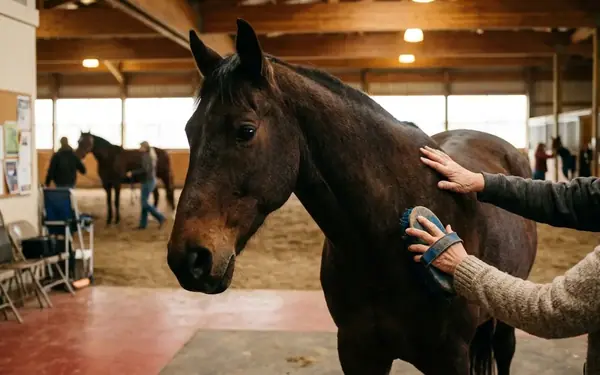
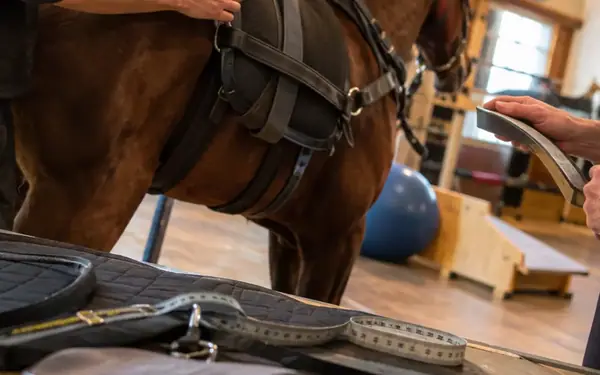
The practical transition begins with handling that feels familiar but points toward a new job. Long-lining, in-hand lateral work, leading over poles, standing at the mounting block, and quiet exposure to saddle pads all build a bridge from harness education to riding education. Patience here saves time later.
- Introduce the saddle pad during grooming so the horse can inspect it without pressure.
- Add the saddle without tightening the girth fully, then remove it before the horse becomes worried.
- Use long-lining to teach steering cues from a position the horse already understands.
- Walk over single poles to encourage the horse to lift the back and organize the feet.
- Delay mounted work until the horse can move forward, halt, bend, and stand quietly from the ground.
This process may look slow from the outside. In practice, it prevents the common argument between a horse trying to use harness posture and a rider asking for a different balance.
Teaching the Canter Requires Biomechanics, Not Force
The canter often becomes the transition’s most visible challenge. A horse that raced exclusively at the pace may default to lateral movement when the rider asks for more energy. A trotter may find the canter sooner, but still need strength and coordination to carry it under saddle.
The time required to establish a balanced canter varies significantly depending on whether the horse raced exclusively at a pace or had prior trotting experience.
Retrainers often use ground poles on a curve to interrupt the pacing rhythm and invite the horse to articulate the hocks. Ground poles are typically spaced somewhere around 9 to 11 feet apart on a standard 20-meter circle. The circle asks for bend, the poles ask for foot placement, and the pattern helps the horse discover a three-beat gait without being chased into confusion.
Recommendation: Let the Pattern Teach the Body
Recommendation: Use poles, lunging, and long-lining to help the horse find its new center of gravity before asking for canter under saddle. The handler should reward moments of balance, not speed.
A useful session may contain only a few clean steps. That is enough. The goal is to let the horse feel that carrying weight, bending through the body, and stepping under with the hind legs can be comfortable.
Good transition work also protects the horse’s confidence. Standardbreds usually try hard, which can tempt riders to ask for too much because the horse does not object loudly. A willing horse still needs a measured program.
Make the Commitment to a Retired Racer
Choose the Horse With a Known Mind
For many pleasure riders, the better choice is not an unstarted young horse. It is a retired Standardbred evaluated through a verified placement program.
Placement programs can observe what a private sales ad often cannot: how the horse handles separation, novel objects, repeated handling, and pressure in a supervised setting. A typical temperament evaluation spans an estimated 3 to 5 days of isolated ground testing before a horse is cleared for amateur adoption listings. That window gives the program time to see patterns rather than one polished moment.
This matters for safety. A rider looking for a trail or pleasure mount needs reliability more than mystery. A retiree with a known work history, a documented temperament review, and a clear transition plan offers a more practical starting point than a young horse whose reactions have not yet been shaped by life.
The Investment Pays Back in the Saddle
Retraining takes time. Tack introduction, ground work, topline development, and canter education all require consistency. Yet that initial investment often returns in the qualities riders value most: steadiness, loyalty, and longevity.
Look beyond the race line. A horse’s last start does not tell the whole story. The quieter evidence appears in how the horse stands for grooming, how quickly it settles after a new sound, how honestly it tries when the task changes, and how carefully a placement program matches that horse to a rider.
Standardbreds have earned a stronger place in pleasure barns, trail groups, and community events. They carry history in their bodies and practicality in their minds. They are not failed racehorses looking for a consolation job; they are road-bred partners waiting for a second career.
Prioritize adopting a retired Standardbred through a verified placement program if the goal is a reliable trail or pleasure mount. That choice respects the breed’s training, protects the rider, and gives a willing horse the structured second career it has already been prepared to understand.