The Hidden Cost of Ignoring Breed History
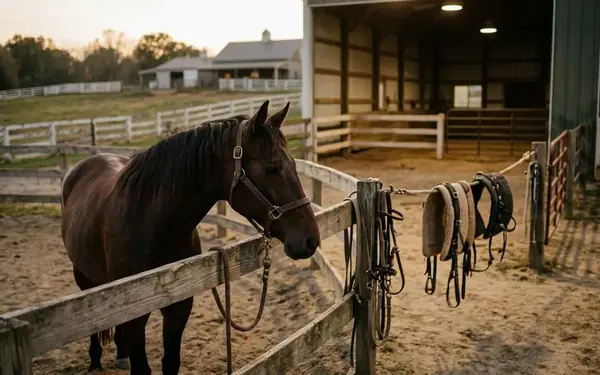
Trainers evaluating off-track Standardbreds establish a baseline by observing free movement. Failing to understand a Standardbred's historical breeding for harness racing leads to immense frustration when retraining them for under-saddle work. Riders who treat them like traditional flat-racing breeds risk misinterpreting their natural gaits and physical mechanics.
Early retraining programs often attempted to force these horses into a collected canter frame immediately. Proper equine care during this phase requires patience, as it can take approximately 4 to 6 months of unmounted long-lining to remodel the topline muscles. Recognizing their specific lineage helps reveal a willing, versatile pleasure horse.
Risk Factor: A classic failure case involves attempting to force a pacing-bred horse into a square trot without addressing underlying muscle tension.
The Standardbred Legacy
The breed is defined by meeting strict speed standards for a one-mile distance. Early breed resources formalized the breed by strictly filtering breeding stock based on timed performance, requiring horses to prove their mechanics on the track before their progeny could be official. The key benchmark was trotting a mile in 2 minutes and 30 seconds.
While historical registry data provides a strong baseline for pedigree analysis—though early studbook records occasionally lack complete maternal lineage, the modern standard remains rooted in timed performance. Lineage traces back to the 18th-century English trotting sire Mambrino and the thoroughbred Messenger. In the 19th century, cultural shifts favored harness racing over flat racing, shaping the breed's development into the modern era.
The Foundation Sires: From Mambrino to Hambletonian
The genetic blueprint of the modern Standardbred begins with Mambrino, a prominent 18th-century English trotting sire. This trotting bloodline was refined by Messenger, an English thoroughbred brought to the United States in 1788. Messenger provided a foundation for stamina and structural durability.
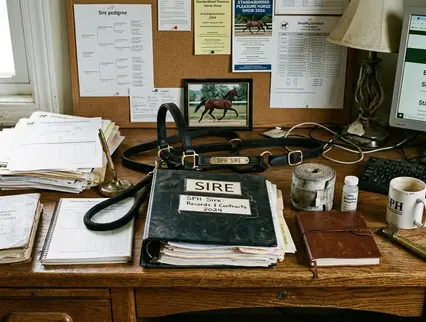
During this era, 19th-century breeders selectively crossed thoroughbred endurance lines with native trotting stock, carefully observing the pasture mechanics of the resulting foals to identify natural diagonal or lateral gaits. Messenger's great-grandson, Hambletonian, foaled in 1849, became the foundation sire for the breed. His unique conformation and powerful hindquarters set a physical template that breeders sought to replicate across generations.
19th-Century Culture and the Rise of Harness Racing
During the 19th century, flat racing was prohibited in many areas of the US due to cultural stigmas. Sitting directly on a horse's back to race was viewed with suspicion by conservative communities. Conversely, trotting races where the horse pulls a driver in a sulky were widely considered a wholesome and acceptable family activity.
Drawing on historical track construction records, local agricultural societies actively chose to construct harness tracks rather than flat-racing venues, aligning their infrastructure investments with the era's moral preference for driving over riding. This cultural divide is famously illustrated by the character Professor Harold Hill in 'The Music Man', who highlights the lingering stigmas associated with certain types of racing.
Legends of the Track: The Era of Dan Patch
The early 20th century saw harness racing reach unusual levels of popularity, driven by superstar horses. Dan Patch, who lived from 1897 to 1916, became one of the most famous Standardbred racers in history. He was a guaranteed draw at any venue he visited.
Handlers managed exhibition schedules by coordinating specialized railway transport, balancing the physical toll of travel with the need to maximize public exposure at county fairs. His celebrity status cemented the Standardbred's reputation for incredible speed, heart, and pacing ability.
Critical Insight: The logistical innovations developed to transport Dan Patch safely across the country set new standards for equine travel that influenced competitive racing for decades.
Beyond the Sulky: Transitioning to Pleasure Horses
Today, the focus has expanded from the sulky to the saddle, requiring a shift in how we view the breed's capabilities. Through member programs and events & shows sustained over decades of advocacy, the Standardbred Pleasure Horse Organization of NJ serves as the primary organization dedicated to promoting the breed beyond the racetrack.
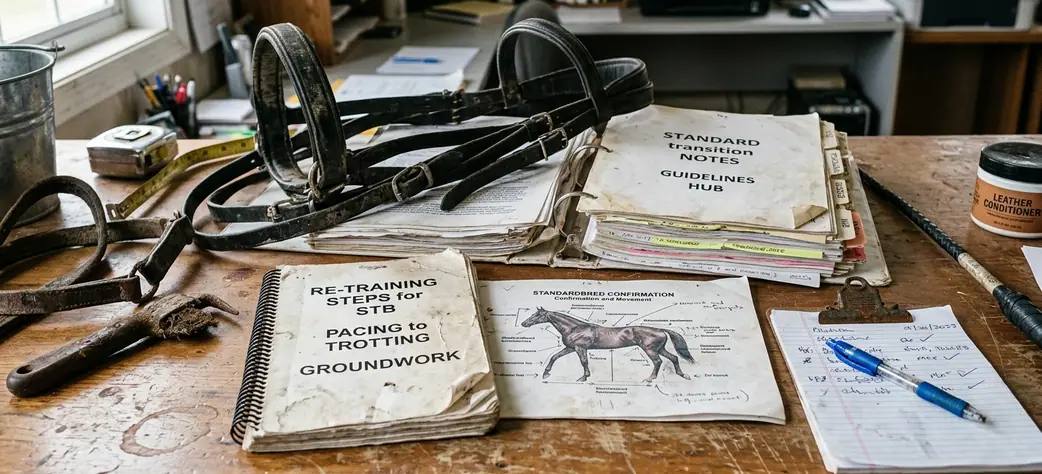
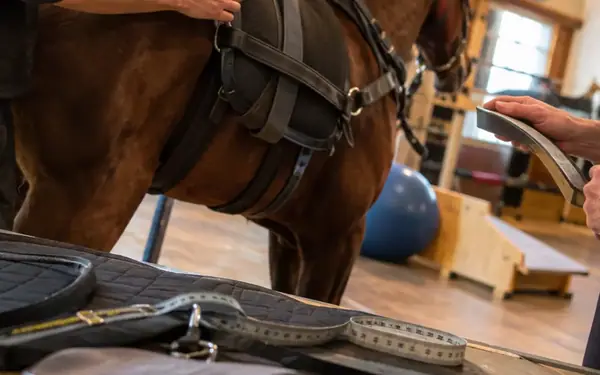
During the adoption & transition phase, certified adoption coordinators assess an off-track horse's suitability for pleasure riding by introducing mounting blocks and saddle pressure in an enclosed ring, evaluating their stress responses before matching. Their work proves that the same traits bred for the track—stamina, a willing temperament, and strong bone structure—make them exceptional pleasure mounts.
One variation to watch for: the degree of lateral stiffness can change based on whether the horse was raced on a half-mile or mile track. Horses that raced exclusively on hard tracks for approximately five years or longer often require specialized shoeing to comfortably transition to uneven trail terrain.
Next Steps for Your Standardbred
Evaluate your Standardbred's natural movement in a round pen today to identify whether they favor a trot or a pace. Use this baseline assessment to tailor your groundwork, specifically focusing on balance exercises that help them adjust from pulling a sulky to carrying a rider's weight.
Riders structure the initial groundwork phase by prioritizing lateral flexion exercises, systematically breaking down the stiff, straight-line carriage the horse developed while pulling a sulky. Plan sessions in the range of 15 to 20 minutes, focusing strictly on walk-to-trot transitions.
Recommendation: Take your horse into the round pen without tack, unclip the lead rope, and record somewhere around three minutes of their free movement at liberty to establish their baseline gait preference.