The Critical Window: Why the Let-Down Phase Dictates Your Success
Rushing a track-conditioned horse directly into a riding frame risks severe anxiety, physical breakdown, and dangerous behavioral blowbacks. A racehorse operates in a high-adrenaline environment where forward motion is the answer to every question. Asking that same animal to immediately accept the shifting weight of a rider and the confinement of a riding ring is a recipe for disaster.
Trainers establish the let-down protocol by observing the horse's resting heart rate and stall pacing behaviors. They wait for these stress indicators to baseline before introducing any new tack. This requires a mandatory let-down period in the range of 30 to 90 days depending on the length of the horse's racing career.
The reward for honoring this transition period is substantial—a bombproof, versatile partner known for the breed's legendary work ethic.
Critical Insight: The core phases of retraining must follow a strict sequence: decompression, groundwork, saddle introduction, and finally, gait balancing. Skipping a step guarantees gaps in the horse's foundational education.
Managing the Physical Shift from Athlete to Pleasure Horse
Adjusting the Diet
Equine nutritionists map out the dietary transition by calculating the caloric deficit from ceased training. Initially, some handlers tried cutting track grain cold turkey, but this was abandoned due to the severe metabolic shock it caused the animals. Safely stepping down high-energy track rations to forage-based diets is the proven method to prevent ulcers and metabolic spikes.
This metabolic shift cannot be rushed.
During program reviews, the optimal approach involves reducing high-starch track concentrates by somewhere around 0.5 to 1.0 pounds every 3 to 4 days. This creates a complete dietary transition spanning approximately 14 to 21 days, allowing the hindgut microbiome to adjust to digesting primarily hay and pasture grass.
Turnout and Bodywork
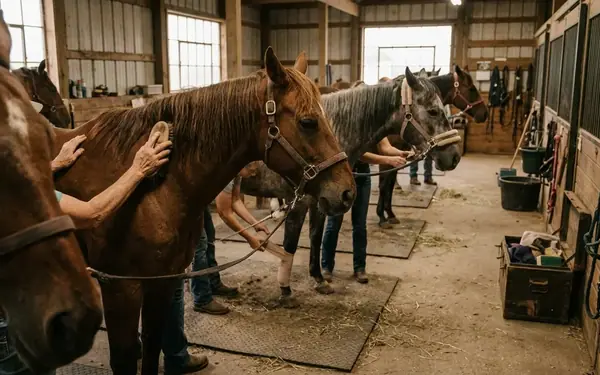
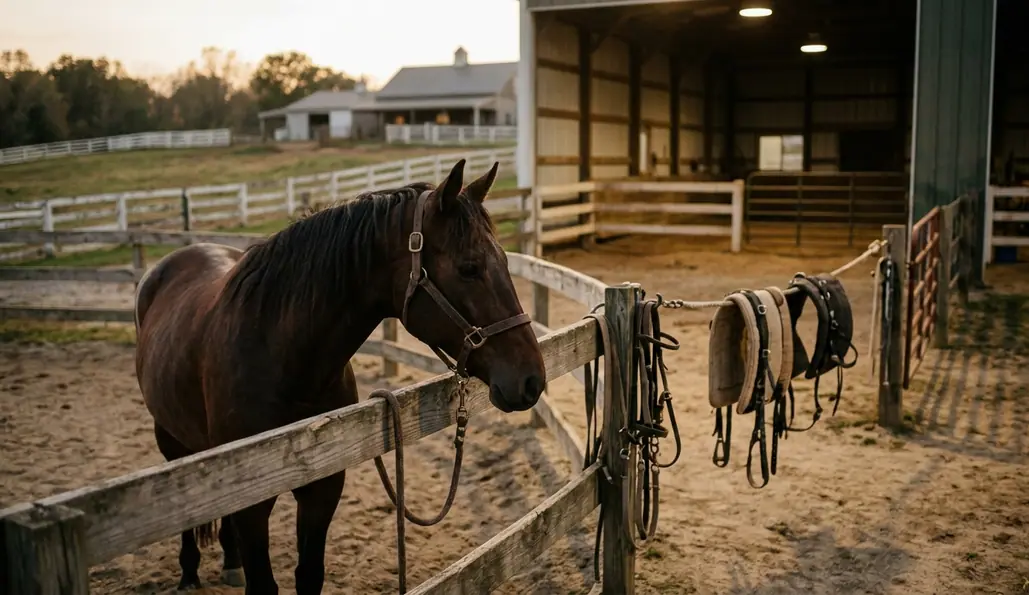
Moving from stall confinement to pasture life allows the horse to learn herd dynamics and relax their nervous system. Track life is highly regimented. Free turnout gives the Standardbred the autonomy to move at their own pace, roll, and stretch tight muscles.
Hoof care and bodywork play an equally vital role. Track-specific shoeing, like trailers or grabs, must be addressed by a qualified farrier to establish a balanced, barefoot, or standard-shod footprint. The racing musculature needs time to soften before you can ask the horse for proper riding carriage.
Groundwork: Translating Harness Cues to Riding Cues
Understanding the Standardbred's track education matters before asking them to work under saddle. They are taught to pull against pressure and ignore objects behind them. A horse leaning into the bit on the track is doing exactly what they were trained to do: pulling the sulky.
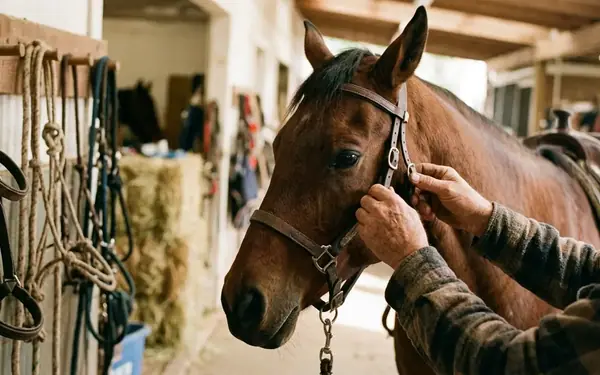
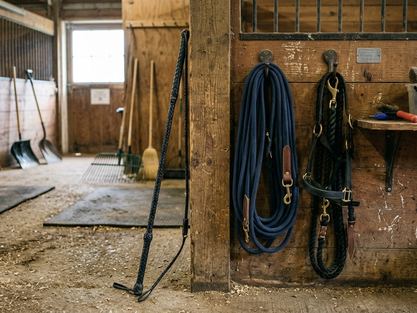
Teaching the horse to yield to pressure rather than lean into it requires a rope halter and targeted groundwork exercises. Handlers decide when to progress from halter pressure to bit pressure by testing the horse's willingness to drop its head and yield its hindquarters laterally on a loose lead.
The bracing reflex must disappear entirely.
Drawing on a review of retraining logs from the Rutgers Equine Science Center, handlers note that establishing voice commands on the lunge line bridges the gap between the driver's voice and the future rider's aids. Words like "walk," "trot," and "whoa" become the anchor points when physical cues are still being translated.
Translating Track Cues to Riding Aids| Track Context | Horse's Learned Response | Riding Context | Retraining Goal |
|---|---|---|---|
| Pressure on the bit | Lean into it to pull the sulky and increase speed | Pressure on the bit | Yield at the poll, soften the jaw, and stop |
| Clucking or kissing | Accelerate rapidly into racing speed | Clucking or kissing | Step up smoothly into the next gait |
| Blinders restricting vision | Focus solely on forward motion | Open field of vision | Accept movement and objects in the peripheral vision |
First Rides: Tack Fitting and Bearing Weight
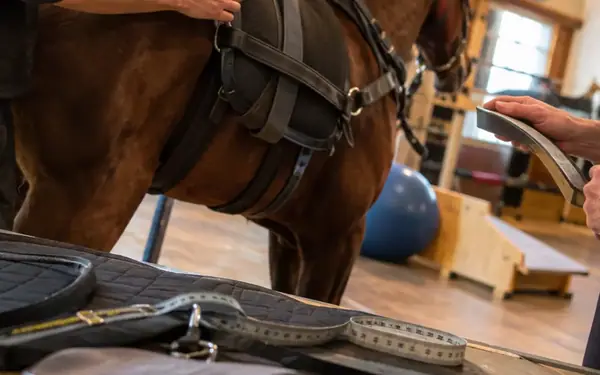
Accommodating the prominent withers and strong shoulders typical of the Standardbred conformation presents unique saddle fit challenges. Saddle fitters determine the appropriate tree width by taking wither tracings every few weeks, adjusting shims in the half-pad to accommodate the rapid changes in back shape as driving muscles atrophy.
One catch: standard quarter horse bars will almost universally pinch a recently retired Standardbred's shoulders until their topline musculature completely rebuilds over several months.
Risk Factor: Assuming a horse that stands perfectly still for harnessing will automatically stand for mounting without targeted block training is a dangerous oversight. The mechanics of a rider stepping up and swinging a leg over are entirely foreign.
Retraining the horse to stand perfectly still beside a mounting block counters the track habit of moving off immediately. First weight-bearing sessions should be kept short and in an enclosed ring. This builds the horse's confidence in balancing a rider's shifting center of gravity without the added variable of open space.
Navigating the Pacer and Trotter Mechanics Under Saddle
Addressing the lateral gaits requires patience and an understanding of biomechanics. Helping pacers find a comfortable rhythm under saddle without the restriction of hopples is a process of unlearning muscle memory. The goal is to encourage the horse to lift its back and engage the hindquarters, moving away from the hollow, inverted frame used for speed.
Developing the canter is often the hardest gait for a retired racer to organize. Riders choose to introduce the canter on the lunge line first, watching for the horse to naturally break into a three-beat gait over ground poles before ever asking for the transition under saddle.
Setting ground poles an estimated 2.5 to 3.0 feet apart disrupts the lateral pacing rhythm and encourages diagonal footfalls. However, pacing-bred versus trotting-bred retirees requiring entirely different ground pole spacing to break up their specific lateral gaits is a reality handlers must adjust for in real-time.
While ground pole exercises reliably disrupt lateral pacing, individual conformation dictates the exact timeline for developing a true three-beat canter.
The Standardbred Mind in Action
Dust kicks up softly at a busy New Jersey trail crossing as a retired pacer stands perfectly square, head lowered, and ears flicking forward. The reins drape loosely across a well-muscled neck. A group of mountain bikers rattles past, gears clicking and tires crunching over gravel, passing within feet of the horse's shoulder. The gelding simply blinks, shifts his weight to rest a hind leg, and waits for the subtle squeeze of his rider's calf to walk on.