The Metabolic Shift from Raceway to Riding Ring
Standardbreds begin their lives bred and raised for high-octane harness racing. Their early diets are geared entirely toward explosive energy. The traditional track diet relies heavily on high-calorie concentrates to fuel intense daily training. Retirement marks a sudden drop in workload—a shift that drastically alters their metabolic needs. A fundamental dietary shift becomes necessary.
Navigating the adoption & transition process requires understanding this baseline. Owners evaluate the exit evaluation from the track trainer, mapping the actual volume of high-starch concentrates previously fed against the new, lower caloric burn of pasture turnout.
Core Dietary Adjustments
Core adjustment: The transition protocol is built by plotting a gradual taper schedule, reducing track grain volume incrementally every few days while simultaneously introducing local forage to allow the hindgut microbes to adapt.
From intake assessments, stepping down high-starch sweet feeds is an immediate priority. Tapering off track concentrates over approximately a 14 to 21 day period prevents digestive shock. You must commit to monitoring Body Condition Score (BCS) somewhere around every 10 to 14 days during the first six months off the track.
First 6 Months Off-Track Dietary Transition Checklist
- Weigh current track grain ration to establish a starting baseline.
- Reduce grain volume by an estimated 10% every 2 to 3 days over a 3-week period.
- Introduce local New Jersey Timothy/Orchard hay, increasing by in the range of 1 pound daily.
Building a Forage-First Foundation
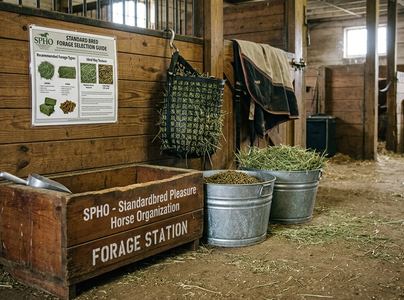
Proper equine care dictates that high-quality pasture and hay must make up the bulk of the retired pacer or trotter's diet. Timothy and Orchard grass are highly suitable for New Jersey climates. Continuous access to forage buffers stomach acid. This manages potential gastric ulcers left over from the legacy of track life.
Many owners make a critical error, assuming a lean off-track Standardbred requires massive amounts of grain to gain weight, which often triggers gastric ulcers rather than healthy muscle development. Drawing on a review of regional agricultural reports, targeting a daily forage intake in the range of 1.5 to 2 pounds of hay per 100 pounds of body weight establishes a proven baseline.
When sourcing local New Jersey hay, a review committee initially considered recommending alfalfa for rapid weight gain in lean retirees, but rejected this approach as a primary forage due to its high calcium content.
Balancing Calories for Hard and Easy Keepers
Standardbreds often leave the track lean, acting as hard keepers. They can easily transition into easy keepers once their metabolism settles into pleasure work. Dietary adjustments are made by tracking the horse's topline development and rib coverage. Introduce soaked beet pulp or flaxseed sequentially rather than simultaneously to isolate which fat source works best. This adds calories safely without adding 'hot' energy.
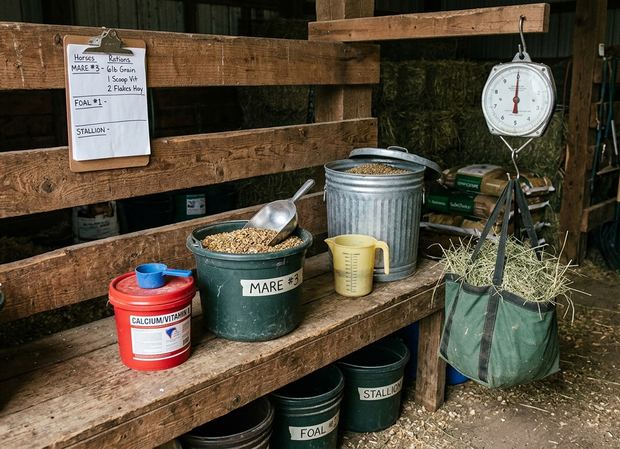
Soaking beet pulp at a ratio of 1 part shreds to 4 parts water for an estimated 30 to 45 minutes prior to feeding supports digestion.
Feeding risk: Adding unfortified rice bran for weight gain requires manually balancing the equine diet's calcium-to-phosphorus ratio, as raw rice bran is heavily inverted toward phosphorus.
Ration balancers ensure vitamin and mineral needs are met without excess calories for the easy keeper. Preparing for local events & shows means keeping their condition stable. Adjusting the forage-to-concentrate ratio based on whether the horse is wintering in a harsh Northern New Jersey climate versus a milder coastal microclimate achieves this balance.
Targeted Support for the Aging Equine Athlete
Early harness racing takes a physical toll. Nutritional support for joint health and hindgut stability becomes necessary as the horse ages. Accessing breed resources helps owners design supplement regimens by reviewing the horse's veterinary lameness exams from their racing career. This allows you to target specific joint wear-and-tear with hyaluronic acid or glucosamine rather than applying a blanket approach.
While targeted joint supplements support mobility, their absorption rates vary significantly depending on the individual horse's baseline hindgut health.
Supplements are only effective as additions to a balanced diet. They cannot fix a poor forage foundation. Following the Rutgers Equine Science Center guidelines on older horse nutrition provides a certified framework for managing these retired athletes.
The Golden Rule of Off-Track Feeding
Feeding recommendation: Participating in member programs reinforces the golden rule of off-track feeding: stop over-graining your retired Standardbred.
Treating a pleasure horse like an active racehorse does more harm than good. The feeding philosophy is established by shifting the owner's mindset from measuring feed by volume using generic scoops to measuring by weight. This helps the pleasure horse receive steadier nutrition. Prioritize high-quality forage above all else. Weigh every meal with a feed scale, eliminate the sweet feed, and let the hay do the heavy lifting.