How to Prepare Your Standardbred for the Show Ring
The First Step into the Show Ring
A former pacer stands calmly at the in-gate of a local New Jersey pleasure show. His coat gleams under the morning light, his ears point forward, and the old tension of high-stakes racing has softened into attention. He has not forgotten the track; he has learned a different job.
Critical Insight: A confident first show starts with four linked phases:
Mental reset: separate the horse from the urgency of race-day routines.
Gait re-education: develop rhythm, balance, and carrying strength under saddle.
Turnout: condition the coat, mane, tail, and tack fit for presentation.
Ring etiquette: teach the horse to work around traffic, noise, and waiting time.
Standardbreds bring a useful foundation to events & shows: stamina, a generous work ethic, and a practical mind. The challenge is not to erase the track background. It is to interpret it correctly. Trainers who handle adoption & transition well usually separate the physical let-down period from formal show ring schooling, so the horse does not meet a new career while still carrying the muscle, habits, and emotional pressure of the last one.
That phased approach protects both soundness and confidence.
Why the track history matters
A horse trained to pull a sulky learned to travel forward into contact, respond quickly to pressure, and maintain a defined gait under speed. In a pleasure class, the same horse must wait, bend, turn, halt, stand, and accept other horses moving in several directions. Success comes from patient translation, not force.
Breed resources and member programs can help owners recognize normal transition patterns. A dull coat, prominent withers, uneven topline, or quick return to the pace may not signal resistance. Often, those details simply show where the new training plan must begin.
Shifting Gears: Mental Preparation and De-escalation
The racetrack teaches energy before stillness. A pleasure show asks for the reverse: the horse must stand quietly, process noise, and wait for a cue that may not come for several minutes. Mental preparation therefore starts away from the saddle, where the handler can rebuild the conversation without the added complexity of rider balance.
Groundwork that changes the relationship
Start with exercises that reward thought instead of speed. Lead the horse in a square pattern, halt at each corner, then ask for one step back before walking on. The point is not the shape. What matters is that the horse learns to pause, reorganize, and look to the handler for the next answer.
Practice yielding the shoulder from light pressure so the horse can move away from crowding in the warm-up ring.
Ask the hindquarters to step over from the ground, then release before the horse rushes.
Use repeated halt-walk transitions to teach that forward energy can return without anxiety.
Introduce standing tied for short, quiet intervals after work, not only before work.
These small drills create a new working contract off the sulky. The horse still moves forward, but forward no longer means urgent.
Desensitization without flooding
Handlers once tried to recreate the show environment by exposing a green horse to several stressors at the same time. The method looked efficient on paper and often produced the opposite result: the horse shut down, braced, or learned to leave mentally before the ride even began.
A cleaner process introduces static objects first. Place a folded banner on the ring fence and work at a distance where the horse can stay soft through the neck. When that feels ordinary, let the banner move in a light breeze. Loudspeakers, ring gates, mounting blocks, jackets over rails, and folding chairs can follow the same progression.
Recommendation: Change only one variable at a time. If the banner starts moving, keep the gait simple. If the loudspeaker turns on, keep the horse on a familiar line. Confidence grows when the horse can identify the question.
Other horses add the final layer. Work first with one steady companion, then two, then a small group. The goal is not to make the Standardbred ignore everything. The goal is to teach him that movement around him does not require a racing response.
Re-Training the Gaits for the Pleasure Ring
Gait work demands precision because the ex-racehorse does not arrive as a blank slate. The body has practiced a specific mechanical answer thousands of times. A former pacer may seek lateral rhythm when anxious. A trotter may lengthen and lean when the rider asks for more energy.
From pulling power to carrying power
The central biomechanical question is simple: can the horse shift weight back without losing rhythm? Half-halts answer that question when they are taught carefully. The rider closes the hand and seat briefly, supports with the leg, then releases as soon as the hindquarters step deeper under the body.
This work actively counters the heavy-on-the-forehand posture that develops while pulling a sulky. It also prevents a common schooling mistake: slowing the horse by holding the mouth. Holding creates tension. A correct half-halt reorganizes the balance and then gives the horse somewhere to go.
Poles, rhythm, and the relaxed trot
Ground poles offer a concrete way to shape tempo without an argument. Many handlers begin with poles spaced somewhere around 4 to 4.5 feet apart to encourage a rhythmic, relaxed trot rather than a pacing gait. The spacing should invite the horse to step cleanly, not stretch or scramble.
Walk over one pole on a straight line until the horse drops the neck and stays even.
Add a second pole only when the first feels ordinary.
Trot through a short line while the rider stays quiet through the thigh and hand.
Leave the line before the horse grows quick; quality matters more than repetition.
Risk Factor: A nervous horse may revert to a hard pace in the warm-up ring if the rider clamps with both legs. That pressure can trigger the track-conditioned response to accelerate, so the safer correction is a half-halt, a wider turn, and a return to walk before rebuilding the trot.
Teaching the canter without drama
The canter often exposes weakness in straightness and core strength. Many Standardbreds need time to organize the outside shoulder, lift the base of the neck, and understand that the rider is asking for a three-beat gait rather than more speed. Clear cues matter. Ask from a balanced trot or active walk, keep the line simple, and reward the first correct depart even if the canter lasts only a few strides.
Circles can help once the horse has enough strength to stay upright. Before that point, a shallow corner or long side may produce a cleaner answer. The horse should not learn that canter means falling inward, racing forward, or being chased into gait.
Grooming and Turnout Standards for Standardbreds
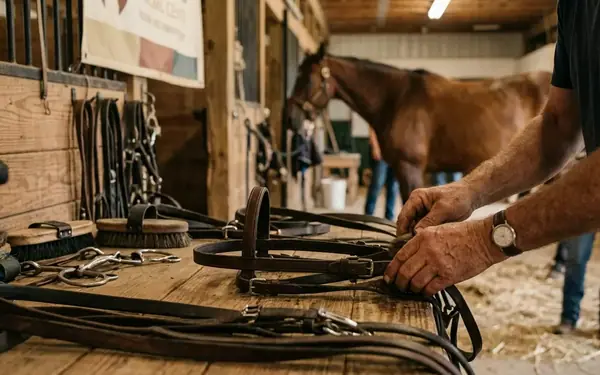
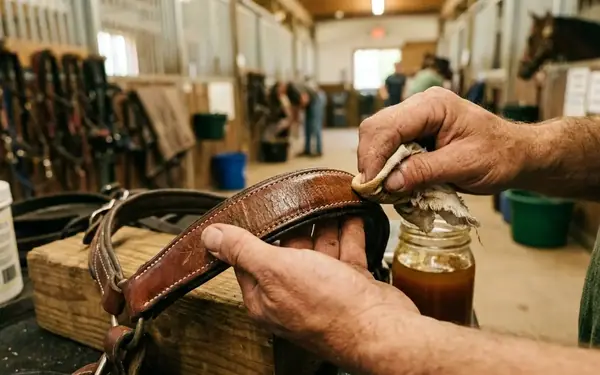
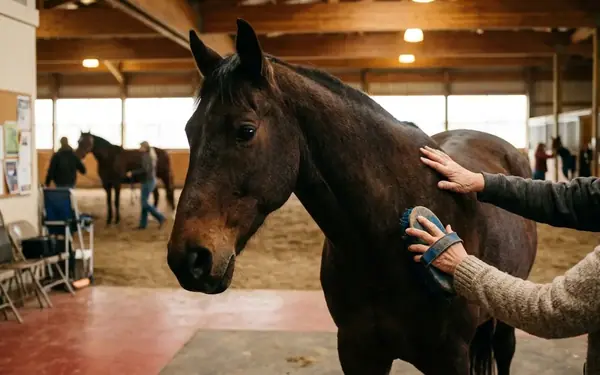
Turnout begins weeks before the first class. The dull track coat improves through consistent equine care: balanced nutrition, daily currying, and enough time for the skin and hair to respond. A curry comb used with purpose does more than lift dirt. It stimulates circulation, loosens dead hair, and gives the handler a daily inspection of sore spots, girth rubs, and changing muscle.
Coat, mane, and tail
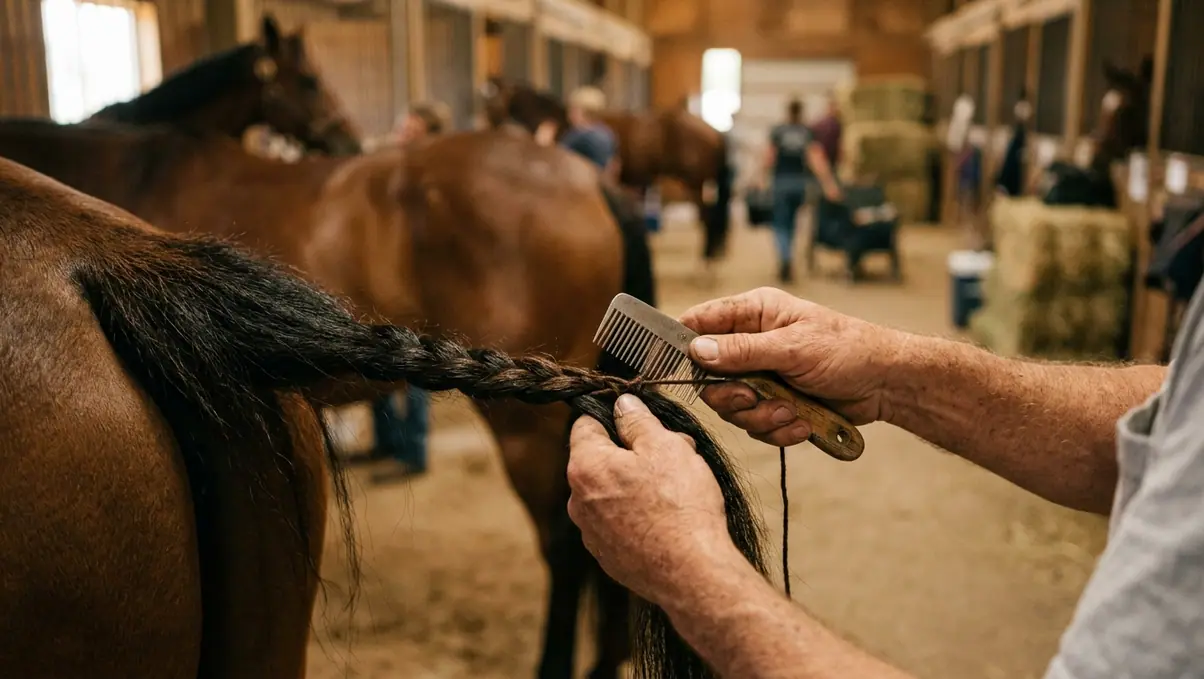
Standardbreds often carry a thick mane and tail, which can look generous at home and untidy in the ring. For English pleasure, some owners pull the mane gradually so it lies flat and can be braided or banded according to local expectations. For Western pleasure, a neat, conditioned mane may suit the class better than aggressive thinning.
Banging the tail creates a clean bottom line, but the cut should match the horse's movement. A tail cut too short can look harsh when the horse lifts through the back. Conditioning sprays help, though they should not replace hand separation and patient detangling.
Tack fit as the topline changes
Tack fitting requires rolling reassessment. As the horse loses track muscle and builds riding muscle, saddle fit changes. A horse fresh off the track with prominent withers may need a very different pad arrangement than the same horse after approximately two years of consistent dressage work.
This is where many riders make turnout a soundness issue. Too much pad can narrow the saddle and pinch. Too little support can let the saddle tip or bridge. Check sweat patterns, girth placement, shoulder freedom, and the horse's willingness to step forward after mounting.
Class rules also matter. Local prize lists set specific expectations, and riders who plan to attend recognized competitions should review the United States Equestrian Federation (USEF) guidelines before selecting bits, appointments, or attire.
Navigating the Show Environment Safely
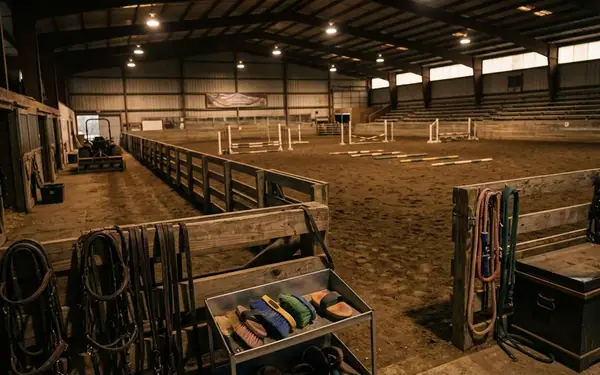
The warm-up ring can be the hardest part of the first show. A track horse learned to travel in one direction with a shared purpose. A show warm-up asks him to process ponies cutting across the diagonal, riders halting near the rail, coaches speaking from the fence, and horses passing nose-to-tail.
Map the ring before mounting
Handlers should identify safe zones before the horse enters the ring. Corners often work well because the horse can stand, observe traffic, and avoid feeling trapped on the rail. The handler can then choose a short line, ride it calmly, and return to the safe zone before stress builds.
One venue-specific constraint matters: this strategy assumes the show grounds provide a dedicated, enclosed warm-up ring. At smaller local venues where competitors warm up in open fields, hand-walking the perimeter may do more to establish boundaries than mounted schooling.
Read stress before it becomes speed
A Standardbred rarely becomes difficult without warning. The signs may be small: the neck shortens, the mouth hardens, the walk loses swing, or the horse begins to lock onto the gate. Those signals call for a simpler task, not a stronger aid.
Move to the inside track if rail traffic creates pressure.
Circle away from congestion before the horse feels boxed in.
Use walk-halt-walk transitions to restore attention.
Step out and hand-walk if the horse stops processing cues.
Recommendation: Leaving the warm-up ring for five quiet minutes can preserve the whole day. A green off-the-track horse learns from the recovery as much as from the exposure.
A Complete Show-Day Blueprint
A first show should run from a timeline, not from hope. Work backward from the class time, protect digestion, and give the horse enough space to absorb the grounds before anyone asks for performance.
Standardbred First Show Day Timeline
Time
Action
Purpose
5:00 AM
Morning feeding and hydration check
Allows 90 minutes for digestion before trailer loading.
6:30 AM
Load into trailer
Provides a buffer for loading delays common with green show horses.
8:00 AM
Arrive and hand-walk the grounds
Lets the horse see the in-gate, warm-up ring, banners, trailers, and show office before tacking up.
9:30 AM
Short lunge and under-saddle warm-up
Confirms rhythm, steering, and brakes without draining the horse before the class.
10:00 AM
Enter walk/trot class
Uses the horse's calmest window for a simple, successful first ring experience.
A copyable first-show case
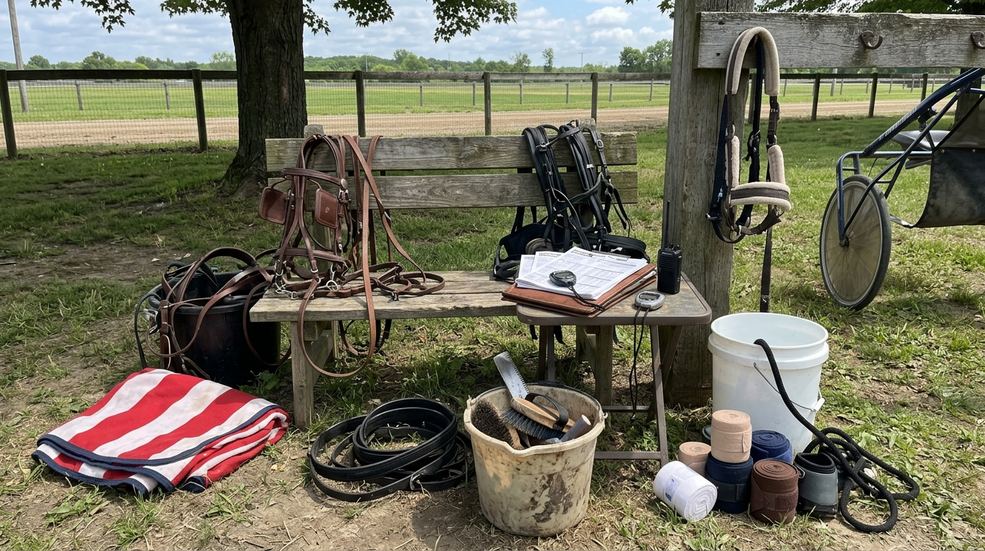
Use this plan for a quiet local walk/trot class with a Standardbred in early adoption & transition. Pack the trailer the night before: hay net, water from home, grooming kit, show bridle, saddle, two pad options, number holder, lead rope, lunge line, and a plain cooler. Keep the morning plain and repeatable.
5:00 AM: Feed the normal morning ration and check water intake. Do not introduce a new supplement or grain on show day.
6:00 AM: Curry the coat, pick the feet, wipe the face, and braid or band only if the horse already tolerates the routine.
6:30 AM: Load quietly. If the horse pauses, return to the practiced loading cue instead of adding noise behind him.
8:00 AM: Arrive, unload, and hand-walk to the in-gate, warm-up ring entrance, water area, and trailer parking edge.
8:45 AM: Let the horse stand at the trailer with hay while the rider checks the class order.
9:15 AM: Tack up with the pad that keeps the saddle level on that day's topline, then walk in-hand for five minutes.
9:30 AM: Lunge briefly at walk and trot, mount, ride large figures, and use half-halts before the horse leans.
9:50 AM: Leave the warm-up on a good walk, breathe at the gate, and face the ring before the class is called.
At 9:58 AM, the rider shortens the reins one hole, asks for a square halt beside the in-gate, softens the hand when the horse exhales, and walks into the 10:00 AM class on the same quiet rhythm practiced at home.