From Isolated Efforts to Shared Clinics: A Five-Year Retrospective
Decades ago, transitioning a former racehorse to a riding horse was an isolated endeavor. Owners brought their retired racers home and faced the daunting task of translating track cues into saddle cues entirely alone. Without a local support network, many riders relied on trial and error to teach their Standardbreds the fundamentals of carrying weight and responding to leg pressure. The turning point occurred when local organizations began pooling resources to offer breed-specific, structured educational programs.
The committee initially considered distributing printed retraining manuals to new adopters to bridge the knowledge gap. They discarded this approach after realizing that written theory could not replace real-time biomechanical corrections. Reading about a half-halt is entirely different from feeling a horse brace against the bit and receiving immediate, ground-level instruction on how to soften that resistance. A manual cannot watch a horse move and tell the rider to adjust their seat bones to encourage a purer trot.
By shifting focus to interactive, in-person sessions, the community created a workable framework. Our five-year review found that consistent participation in organization-sponsored clinics can reduce the time it takes for a retired pacer or trotter to comfortably accept pleasure riding cues. Riders receive immediate feedback, horses learn by watching their peers, and the transition process moves faster in a safe, supportive setting.
Tracking Biomechanical and Behavioral Shifts Under Saddle
The transition from driving mechanics to riding mechanics requires patience, especially during the first few rides. Racehorses are taught to pull into their driving gear and lean on the bit for balance at high speeds. Under saddle, they must learn to carry themselves, push from their hindquarters, and soften through the jaw and poll. Clinicians deliberately sequence the exercises to address the pacing muscle memory first. They prioritize lateral flexion sequencing for former pacers and suppleness on a loose rein before introducing any vertical collection demands.
This methodical approach yields measurable results. It takes about 4 to 6 weeks to establish a balanced canter departure. During this phase, instructors use circles around 15 meters in diameter to encourage inside hind leg engagement. The smaller circle forces the horse to step under its center of gravity, naturally breaking up the lateral pacing gait and encouraging a true three-beat canter. Riders learn to support the inside shoulder while asking for the transition, preventing the horse from falling in or rushing the departure.
Mastering the Canter Departure: Focus entirely on the quality of the trot before asking for the canter. A rushed, unbalanced trot will always result in a hollow, lateral canter. Establish rhythm and relaxation on a circle close to 15 meters in diameter first.
We also track behavioral milestones alongside these physical changes. Horses demonstrate increased relaxation on group trail rides and reduced anxiety in busy riding rings. The clinic exposes them to multiple horses moving in different directions, simulating the activity of a warm-up ring or a crowded trail. This exposure, managed under the guidance of experienced clinicians, builds confidence in the retired racehorse.
The Hidden Logistics of Breed-Specific Education
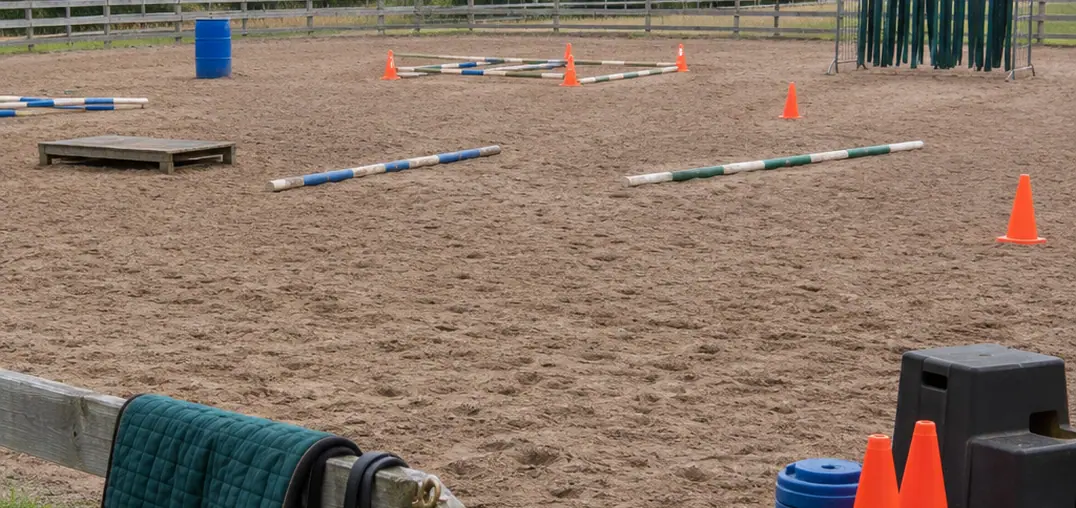
Hosting these structured community clinics requires substantial volunteer effort and careful financial planning. When budgeting for the season, organizers prioritize securing specialized clinicians and safe, enclosed riding-facility rentals over promotional materials. This financial discipline ensures that member dues directly subsidize the educational program. A clinician who understands the specific biomechanics of a Standardbred is worth far more than a glossy brochure or a targeted social media campaign.
The physical infrastructure matters just as much as the instruction. Enclosed riding spaces provide a safe boundary for horses that are still learning to balance a rider. Good footing prevents soft tissue injuries as the horses develop new muscle groups. Securing these facilities requires a significant portion of the annual budget, making fundraising efforts and member contributions vital to the program's survival.
Behind the scenes, the community drives the operation. Volunteers dedicate roughly 12 to 15 hours per weekend event to ground logistics and schedule management. They direct trailer parking, manage the warm-up ring, check negative Coggins paperwork, and provide peer support to nervous riders. This volunteer force forms the backbone of the clinic series, transforming a simple riding lesson into a community event.
Evaluating Group Feedback Against Solo Retraining
Independent trainers and experienced owners also achieve successful transitions. Many Standardbreds learn their new jobs quietly in home riding rings across the country. The timeline for these independent transitions is often extended due to a lack of immediate, breed-specific feedback. A solo rider might spend weeks trying to fix a hollow frame, unaware that their own saddle placement is restricting the horse's shoulder movement.
The clinic setting prevents these common retraining plateaus by offering real-time corrections from professionals familiar with the Standardbred's unique racing background. Evaluators assess transition progress by comparing how quickly horses in both groups learn to yield to leg pressure rather than leaning into the bit, a common residual habit from harness racing. In recent transition assessments, the contrast in muscle development becomes apparent. Horses in the clinic system develop top-line muscling faster because their riders receive ongoing guidance on achieving true self-carriage.
Recognizing the Let-Down Phase: Time off the track is non-negotiable. Attempting to retrain a horse that is still mentally in race mode will only create resistance and anxiety.
The accelerated retraining timelines observed in these group settings depend on the retired racehorse having completed a minimum 60-day post-track let-down requirement for clinic entry before beginning under-saddle work, recognizing that older geldings with extensive track miles often require extended suppling phases. This mandatory rest period allows the horse to decompress mentally, flush track medications from their system, and adjust to a forage-based diet. Without this let-down period, even the best clinic instruction will fail to produce a relaxed pleasure horse.
The Case for Uninterrupted Seasonal Participation
Attending a single, isolated clinic is insufficient for creating lasting muscular and behavioral changes in a retired racehorse. Muscle memory takes months to rebuild. A horse that has spent around five years pulling a sulky will not permanently change its posture after one weekend of lateral work. To foster long-term muscular and behavioral adaptation, the scheduling committee structures the curriculum progressively.
Participants must build upon exercises introduced in previous months. The May clinic expands on the suppling exercises taught in April. The June session introduces ground poles based on the balance achieved in May. This cohesive structure requires dedication from the riders. A full clinic season spanning April through October provides the framework needed to guide a horse from its first wobbly rides to confident, balanced performance.
Commit to the entire schedule. Register for the April session and participate in every clinic through October. This uninterrupted seasonal participation offers a clear path to transforming a retired track horse into a responsive, willing pleasure partner. Your horse needs the consistency of a progressive curriculum, and you need the ongoing support of a community that understands the transition from track to saddle.