The Real Question Behind Equestrian Connection
What truly builds a lasting bond with a Standardbred after their racing career ends?
While year-end awards and polished pleasure-driving rounds celebrate achievement, the deepest connection to the breed often develops through volunteering at SPHO-NJ events. Working on the ground gives riders, drivers, and supporters a broader view of how Standardbreds respond to unfamiliar horses, equipment, voices, and spaces. It also places each volunteer inside the human network that supports adoption & transition.
Connection Beyond Riding
Community outreach once centered heavily on under-saddle clinics. Those sessions could improve specific skills, yet an exclusively ridden format sometimes pressed handlers to establish communication before the horse had settled into life away from the track. Organizers shifted more attention toward ground-level volunteer integration, where people could study behavior without simultaneously managing reins, balance, direction, and their own show-day nerves.
That distinction matters during a standard off-track transition period of approximately 6 to 9 months. A horse may appear calm while still relying on responses built around the track: following traffic, accelerating with nearby horses, reacting to equipment changes, or anticipating a rapid sequence of handlers. Volunteers can watch those patterns unfold across an entire event rather than viewing them only from one saddle.
A Wider View of the Breed
The volunteer role connects three forms of understanding. It reveals the Standardbred's generally willing temperament under pressure, introduces owners to a practical support network, and contributes directly to events & shows where green horses can gain appropriate experience.
The result reaches beyond a single horse-and-rider partnership. A registration worker may notice that several new owners have the same harness-fitting question. A gate steward may identify a recurring pacing trigger. An equipment checker may connect an inexperienced handler with a member who has already managed that transition. These small interventions become breed resources in motion.
Trading the Saddle for the Ring Gate
Competition narrows attention. A rider entering a pleasure class must monitor rein contact, gait quality, ring traffic, judge position, and the horse's emotional state within a few seconds. The person standing at the gate sees a different picture.
From that grounded position, a volunteer can compare how several Standardbreds approach the same threshold. One walks forward on a loose neck. Another raises its head as the horse ahead begins to pace. A third fixes both ears toward the ring and tightens through the stride before the handler recognizes the change.
Reading the Approach
A long-serving gate volunteer develops an eye for these small differences. Ear carriage, stride tension, neck position, and breathing rhythm provide more useful information than a general label such as “nervous.” Observing many horses from the same location sharpens that distinction because the volunteer can separate an individual response from the shared effect of the gate, crowd, or ring traffic.
Gate volunteers use those observations to regulate entry. When a Standardbred shows track-like pacing behavior, they maintain a buffer zone in the range of 15 to 20 feet at the in-gate. They may hold the next entry until the horse already inside lowers and relaxes its neck. This simple spacing decision prevents pressure from building behind a horse that interprets close traffic as a cue to accelerate.
The In-Gate Buffer
Space at the gate gives the handler time to recover rhythm before forward movement becomes a race-conditioned response.
That lesson can be difficult to detect from the saddle. The rider feels the quickened steps and growing tension, but the gate worker sees the full sequence: the approaching horse, the shrinking distance, the elevated neck, and the first break in rhythm. Ground observation exposes the trigger rather than only the resulting behavior.
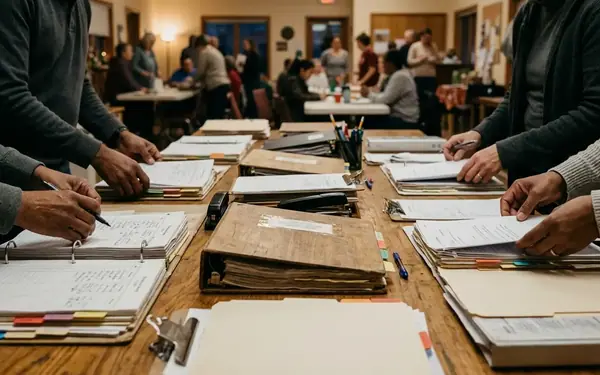
This work also keeps grassroots events functioning. Entries must move safely, paperwork must reach the correct officials, equipment checks must remain orderly, and anxious combinations need time without stalling the entire program. Volunteers form the operational backbone of the aftercare community because each calm decision protects both the schedule and the horse.
The Human Element of Harness Racing Aftercare
The warm-up ring often produces the day's most useful conversations. Experienced members can watch a new owner complete a circle, change direction, and prepare for the gate before offering one precise adjustment. That timing makes the advice relevant to the horse standing in front of them.
Mentoring Beside the Warm-Up Ring
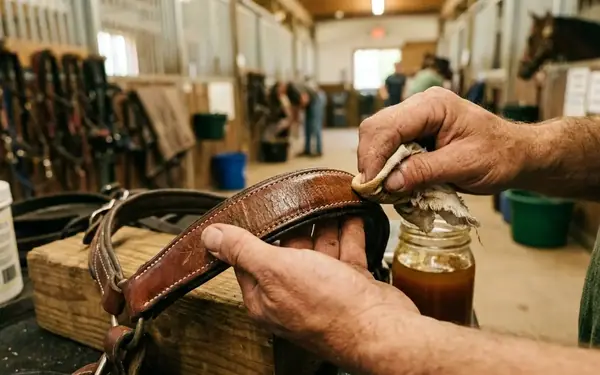
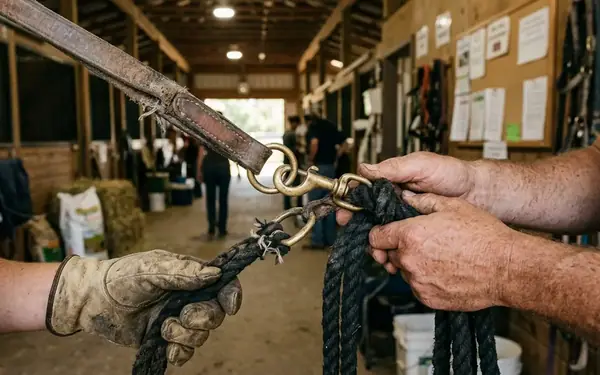
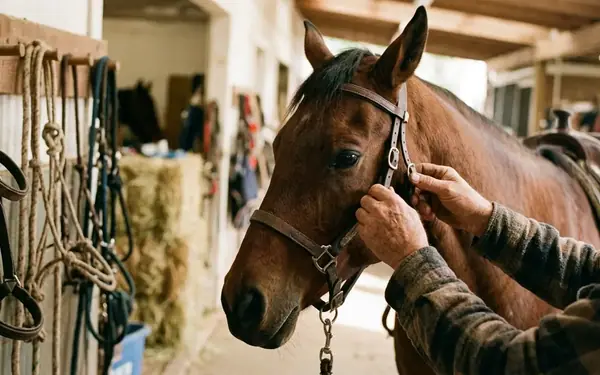
Mentorship pairings tend to form organically. A volunteer notices a handler struggling with a gear transition, such as moving from a track-style Buxton breast collar to pleasure-driving equipment. Instead of delivering a broad lecture, the experienced member checks how the new equipment sits, watches the horse move, and explains which response comes from unfamiliar pressure rather than disobedience.
The same process applies to bitting and pacing cues. A green Standardbred may understand steady contact in one context yet become uncertain when a pleasure driver changes rein feel, voice cues, or body position. A mentor can help the owner isolate one variable at a time. That method protects clarity: equipment fit comes first, cue consistency follows, and gait correction begins only after the horse can interpret both.
Advice Without Judgment
The strongest volunteer networks respond to a struggling combination with observation rather than criticism. Experienced members may ask where the horse completed its let-down period, which equipment changed recently, or whether the pacing begins near other horses. Those questions turn a stressful warm-up into a manageable biomechanical problem.
The mentoring principle is concise:
Identify the trigger, restore a familiar rhythm, and change only one part of the setup at a time.
A typical exchange may last only a few minutes. One person steadies the horse while another checks the equipment. A third watches the next lap and reports whether the stride length becomes more even. The new owner leaves with a practical sequence to repeat at home, while the experienced members gain a clearer picture of the challenges appearing across current adoption & transition cases.
This shared time creates a safety net of breed-specific knowledge. Standardbred gait questions rarely exist in isolation; they involve conditioning history, equipment, balance, surroundings, and learned track routines. Community members can address those factors with patience because they recognize the behavior and understand the horse's previous working language.
What Green Standardbreds Learn from the Sidelines
A well-managed event teaches a green Standardbred that a show ring can hold activity without demanding speed. Horses hear announcements, watch traffic collect near the rail, pass unfamiliar equipment, and wait while other entries move ahead. Calm volunteers give that activity a predictable structure.
Quiet Direction in the Ring
Ring stewards monitor more than class order. They watch for track-conditioned anxiety, including rapid head-tossing followed by a pacing trigger. When that sequence appears, a steward may quietly step into the horse's line of sight to interrupt its fixed focus. The intervention remains measured: enough presence to redirect attention, followed by enough space for the handler to restore rhythm.
Consistency carries more weight than force. A steward who uses clear positioning and an even pace helps the horse interpret human movement around the ring. The Standardbred begins to learn that a person approaching its shoulder may guide direction, that horses passing nearby do not require acceleration, and that waiting at the rail can remain uneventful.
Let-Down Before Show Exposure
Busy events have a defined place in retraining. They become counterproductive when a horse has not completed a basic let-down period of somewhere around 30 to 45 days at a quiet home farm to release residual track adrenaline. Show exposure cannot replace rest, turnout, consistent equine care, and the first stages of communication.
This timing is particularly important when evaluating gait. Fatigue, environmental tension, and learned acceleration can all alter stride mechanics. A horse brought into a crowded ring too soon may rehearse the same high-alert pattern that the new program aims to soften. Once the let-down foundation is in place, controlled event exposure can help the horse distinguish pleasure-ring expectations from racetrack routine.
Volunteers support that distinction by keeping pathways open, limiting crowding, and communicating before moving horses through shared spaces. Their work may look administrative from outside the ring. To the horse, it creates the consistency required for a new response to take hold.
Stepping Into the Standardbred Herd Dynamic
Participation does not require horse ownership. Someone who can organize entries, monitor an in-gate, assist with equipment checks, or guide visitors toward breed resources can influence the quality of an event. The role also offers a close view of Standardbred behavior without the immediate demands of riding or driving.
A Useful First Shift
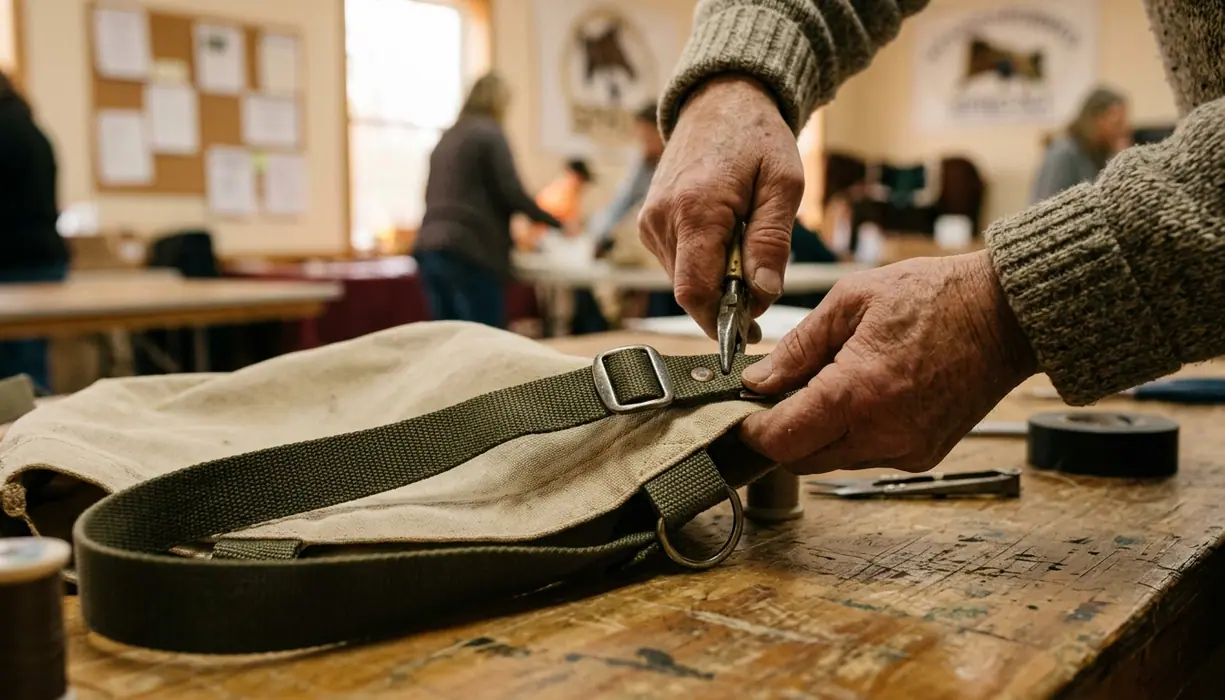
New volunteers can begin with a clearly bounded task and learn alongside experienced members. Registration reveals how the day is structured. Gate duty develops awareness of spacing and gait tension. Warm-up support brings direct exposure to equipment fit, bitting questions, and the practical concerns of new owners. Each assignment contributes to safer events & shows while building familiarity with the breed.
Volunteer shift rotations last an estimated 2.5 to 3 hours, which helps handlers remain attentive during work that depends on timing and observation. Fresh personnel make steadier decisions at the gate and communicate more clearly when an anxious horse needs extra room.
Recreating Familiar Social Structure
Event coordinators can structure the day to resemble the track's paddock routine in one important respect: multiple calm people participate in the horse's movement and preparation. Rotating personnel allows a Standardbred to interact with different handlers while receiving consistent guidance. That bustling, organized atmosphere feels recognizable even as the horse learns an entirely new job.
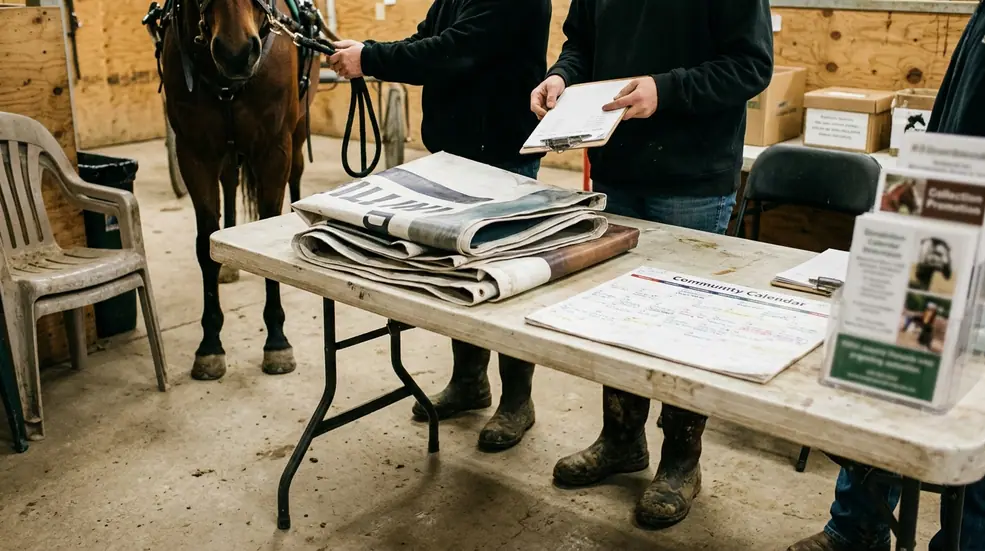
For people, the same arrangement creates community. Owners discover whom to ask about gait correction, volunteers learn where practical help is needed, and experienced members pass along knowledge that cannot be captured fully in written breed resources. The horse stands at the center of that exchange.
A racing Standardbred's daily team-based routine includes four distinct human roles: grooms, trainers, drivers, and paddock judges.