Relaxation Beats Spectacle in Amateur Tests
In amateur dressage, a horse that works willingly and remains relaxed can outscore a flashier horse carrying visible tension. That verdict places the Standardbred on stronger footing than its reputation suggests. A schooling-show judge evaluates the test presented that day, including rhythm, accuracy, acceptance of the aids, and the quality of each transition. Breed prestige cannot complete a balanced circle or preserve a clear walk rhythm.
European Warmblood breeding programs helped shape modern expectations for dressage movement. Generations of selection emphasized an uphill outline, elastic joints, suspension, and expressive reach. Those qualities suit dressage, particularly as tests demand greater collection and power.
The American Standardbred arrived through a different breeding brief. Durability, speed, and a level-headed work ethic mattered on the harness track. The resulting horse may enter adoption and transition without the natural suspension associated with a Warmblood, yet often brings stamina, trainability, and an established habit of moving forward in response to a handler.
Two Breeding Briefs, Two Training Plans
Biomechanical comparison should guide retraining rather than turn into an attempt to manufacture Warmblood movement. Amateur trainers evaluating both breeds have found more value in developing rhythm and relaxation during the initial phase. Artificially driving a Standardbred into exaggerated suspension can shorten the back, hurry the tempo, and create tension through the neck. Those changes weaken the qualities that make the horse competitive.
A better plan starts with a regular tempo, free movement through the back, and quiet acceptance of contact. Suspension may improve as strength develops, but it remains a product of balance rather than a pose imposed by the rider.
This comparison applies to amateur retraining and open schooling tests rather than upper-level dressage selection. Within that scope, the Standardbred's practical strengths can influence every scored movement. A relaxed horse gives the rider time to prepare corners, maintain geometry, and present transitions at the requested markers.
The Warm-Up Ring Favors the Settled Horse
Warmbloods hold a legitimate conformational advantage in many dressage settings. Their uphill build and natural suspension can produce the expressive movement judges expect. The open schooling-show warm-up ring, however, tests more than raw movement.
Flapping tent panels, loudspeakers, trailers, close-passing horses, and uncertain traffic patterns create a demanding environment. A tense horse may shorten its walk, brace against the hand, spook away from the rail, or rush through transitions. Each reaction follows the pair toward the competition ring if the warm-up increases pressure instead of restoring attention.
A Long-Rein Routine Near the Tents
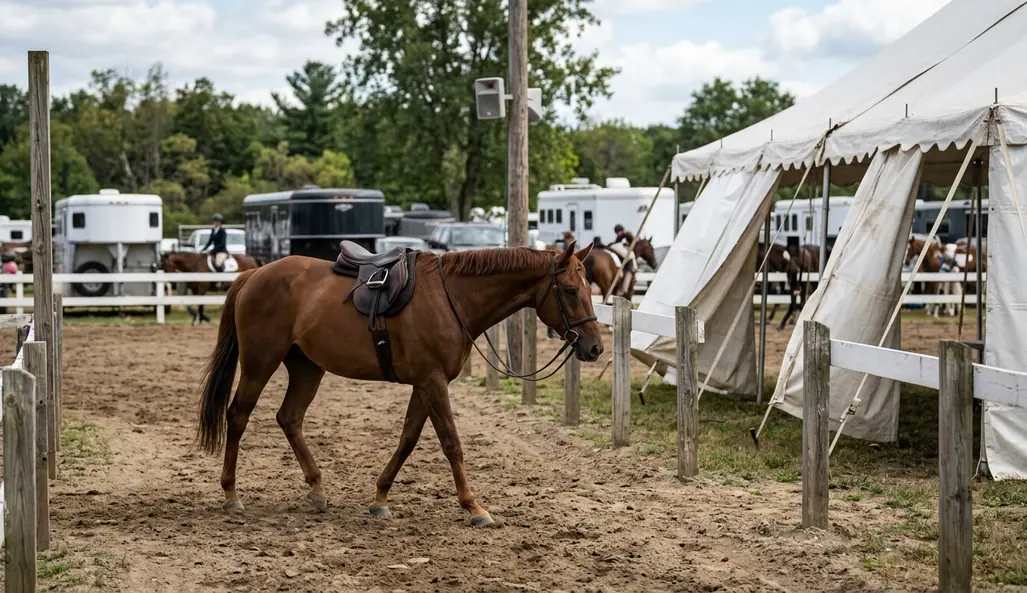
Competitors assessing the layout around the open schooling-show warm-up tents found that aggressive, high-energy routines often asked too much too soon. Riders gained a more useful response by beginning with a long-rein walking protocol. The horse could observe the setting, settle into a four-beat rhythm, and reconnect with the rider before taking a shorter rein.
The sequence matters. Enter at the walk, establish steering, and pass the visually busy side of the ring without demanding a fixed frame. Change direction once the tempo remains steady. Shorten the reins gradually, then add simple transitions while preserving the same rhythm. This approach uses the warm-up to regulate attention rather than display the horse's biggest movement.
Flash loses value when tension interrupts submission. The dressage scoring guidelines for submission and relaxation place clear importance on willing cooperation, harmony, and acceptance of the aids. A Standardbred that walks past a moving tent, stays on the rider's line, and enters the test breathing normally presents those qualities in observable form.
Warm-up restraint also preserves energy. Standardbreds usually need enough preparation to loosen the topline and confirm the aids, while repeated high-powered laps can encourage rushing. Quiet work gives the rider a clearer measure of readiness: the horse bends, waits, and returns to walk without argument.
Track Exposure Becomes Arena Focus
The Standardbred's strongest dressage asset may sit between the ears. Harness racing exposes a horse to equipment, noise, movement, and close company while requiring sustained attention to the driver's cues. That background can transfer directly to the dressage training scale.
From Sulky Shafts to Steady Contact
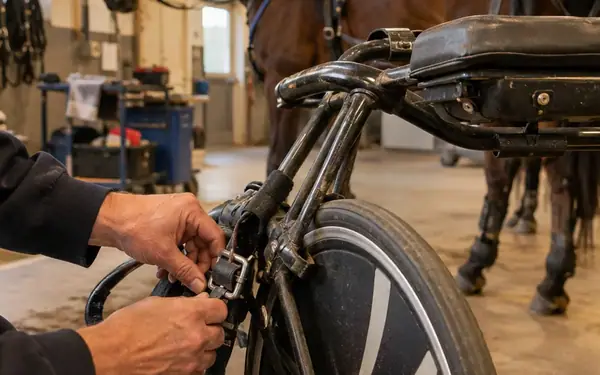
Consider the sensory demands associated with an estimated two-minute qualifying mile. Sulky shafts may rub along the horse's flanks while loudspeaker feedback travels across the grounds. Other horses move nearby, equipment shifts, and the driver still expects a prompt, controlled response. Through repetition, many Standardbreds learn to sort relevant signals from background noise.
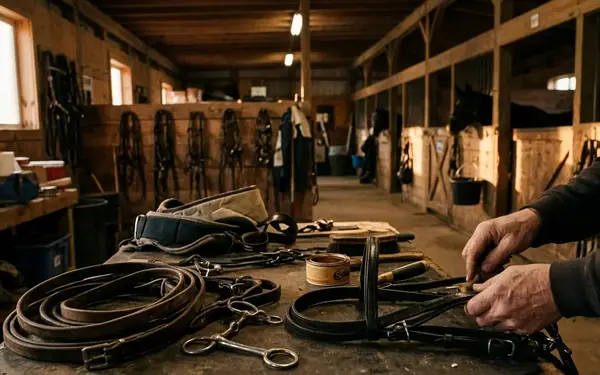
A practical approach to sulky-shaft desensitization connects those experiences with dressage-ring requirements. Tolerance of contact near the flanks can support acceptance of the rider's leg. Attention to rein cues can develop into steadier communication through the bit. Familiarity with loud, active venues can help the horse remain available when a schooling show becomes crowded.
Dressage uses the term submission for this willing acceptance. It describes a horse that receives the aids without resistance, maintains the requested rhythm, and stays mentally connected to the rider. Forced compliance produces a different picture: a tight jaw, restricted back, or hurried steps. The track-tested brain offers value because the horse may already understand how to work within a busy environment while responding to a human cue.
For an amateur rider, that mental availability can carry more practical value than athletic power that remains difficult to regulate. A rideable Standardbred allows the rider to refine one element at a time—first rhythm, then contact, straightness, and increased carrying strength. Progress becomes easier to evaluate because excess energy does not obscure every response.
Racing history still requires individual assessment. Severe track trauma can significantly reduce this psychological advantage, and affected horses need a prolonged behavioral rehabilitation phase before ridden work begins. Equine care records, handling responses, and reactions to harness-related equipment should inform the adoption and transition plan.
Build the Test Around Walk and Geometry
A competitive schooling-show strategy should concentrate training where a Standardbred can produce repeatable quality. Extended movement offers little return if it creates rushing or loss of balance. Walk work, accurate figures, and prepared transitions give the pair clearer scoring opportunities.
Two Priorities With Measurable Execution
- Maximize the walk. Develop a relaxed, ground-covering four-beat rhythm on both reins. Practice allowing the neck forward while keeping the horse attentive to the line. During the test, ride the full movement instead of gathering the reins early. Tense horses may jig or shorten their steps; the settled Standardbred can present a clean contrast.
- Ride exact geometry. School round 20-meter circles, straight centerlines, and corners that establish bend before the next figure. Accuracy helps compensate for modest suspension because it shows preparation and control. Transitions should occur at the requested marker, with the rider organizing the tempo several strides beforehand.
Deep corners require judgment. Riders can travel approximately 1.5 to 2.0 meters into the corner before beginning a 20-meter circle. This creates enough space to establish bend without turning the corner into an abrupt pivot. The circle should then touch its planned points and return to the track on the original line.
The walk diagonal deserves the same precision. Hold the relaxed four-beat sequence for somewhere around 12 to 15 seconds while crossing the diagonal. Keep the horse marching toward the destination letter, allow the neck to follow the stride, and wait until the movement ends before preparing the next transition.
A Schooling-Show Ride to Copy
- Enter the warm-up at a free walk and spend the first passes on a long rein. Ride near the tent side once in each direction, maintaining the chosen line while allowing the horse to look briefly.
- Shorten the reins only after the walk becomes regular. Confirm one upward transition and one downward transition without increasing the tempo.
- In the test, approach the walk diagonal on a balanced turn. Allow the horse to cover the diagonal in a clear four-beat rhythm for the 12 to 15 seconds described above, keeping the nose aimed at the destination letter.
- Prepare the next 20-meter circle by riding the 1.5 to 2.0 meters into the corner described above. Establish the bend there, leave the track on the planned tangent, and hold the same rhythm around the complete circle.
- Return to the track exactly where the circle began, straighten the horse, and make the next transition at its marker. This sequence converts the Standardbred's calm walk, focus, and work ethic into visible points the judge can reward.