Competitive trail riding (CTR) tests a partnership against the clock, the terrain, and the stethoscope. Riders cover a marked course within a strict time window, earning points for veterinary soundness, metabolic recovery, and trail manners rather than crossing the finish line first. Succeeding with an off-track Standardbred in New Jersey hinges on three primary adjustments: rebuilding the topline muscles for carrying weight over uneven ground, teaching rateable pacing away from pack instincts, and leveraging the breed's naturally efficient cardiovascular recovery at veterinary checkpoints.
Within our member programs at the Standardbred Pleasure Horse Organization of New Jersey (SPHO-NJ), we have watched dozens of retired harness horses transition from half-mile ovals to distance events. When our riding members first began entering distance events, we evaluated whether to retrain retired pacers exclusively into a two-beat diagonal trot before competing, or to condition their existing intermediate gaits. We settled on prioritizing structural topline development and metabolic control first, finding that veterinary judges care about soundness and consistent gait rhythm rather than which diagonal or lateral pair moves together.
What Competitive Trail Riding Demands From an Off-Track Standardbred
Novice competitive trail divisions typically cover 15 to 25 miles at a regulated pace of 4 to 6 miles per hour, penalized if a rider crosses the finish line outside a strict 15-to-30-minute target window. This format rewards a horse that can travel at a steady, ground-covering clip without burning nervous energy.
While individual horses vary based on their prior racing wear-and-tear, a retired Standardbred brings a remarkable foundational aerobic base to the trail. Years of jogging and racing create dense capillary networks and high stroke volume in the heart. However, pulling a lightweight sulky on a flat surface develops long, flat propulsive muscles in the hindquarters while leaving the back and abdominal sling relatively under-engaged for carrying dead weight.
Transitioning a horse from the leaning posture of a harness overcheck to carrying a rider's weight over uneven ground requires 8 to 12 weeks of dedicated thoracic sling strengthening before entering a judged event. During this transition, we focus on long-and-low hill work, backing up mild inclines, and stepping over raised cavalletti to lift the base of the neck and round the loin.
Adapting Racetrack Fitness to the Pine Barrens and Northern Highlands
New Jersey riders face a sharp geological divide that contrasts with the flat, groomed limestone surfaces of harness tracks. In the southern coastal plain, parks like Brendan T. Byrne and Wharton State Forest feature miles of deep, shifting sugar sand. Head north into the Skylands region—such as Kittatinny Valley State Park—and the trails turn into steep glacial moraines littered with fractured shale and angular granite.
Riders preparing for southern rides initially tried replicating racetrack interval sprints in the deep sand of Wharton State Forest to build rapid wind. We abandoned that approach after seeing immediate deep digital flexor fatigue, shifting instead to progressive long-slow distance walking on firm fire roads before introducing high-drag coastal plain footing. Deep sand pulls at the toe and loads the suspensory apparatus at the end of every stride.
Tendon Remodeling Realities
Conditioning on deep Pine Barrens sand should start with 20-to-30-minute walking intervals twice weekly over 6 to 10 weeks to allow dense remodeling of the suspensory ligaments. Retirees exiting the track with prior suspensory branch desmitis or sesamoiditis must spend an initial 12 to 16 weeks walking exclusively on compacted limestone or firm dirt roads before attempting uncompacted sand trails.
For the northern parks, equine care shifts from soft-tissue drag to concussive protection and climbing strength. Navigating the fractured shale and glacial granite of northern parks like Kittatinny Valley requires fitting composite hoof boots or polyurethane rim pads hovering near 4 millimeters thick with frog support at least 3 weeks prior to competition to prevent sole bruising. Many off-track Standardbreds have flat soles suited for groomed stone dust; testing your hoof protection well ahead of your first local ride ensures the boots do not rub the pastern bulbs during wet stream crossings.
Shifting From Pulling Tension to Weight-Bearing
- Weeks 1–4 (Thoracic Sling Engagement): Walk 4 to 5 miles three times a week on firm, rolling trails. Ask the horse to stretch its nose down toward chest level while marching up gradual hills, lifting the withers between the shoulder blades.
- Weeks 5–8 (Footing Introduction): Introduce 20-to-30-minute walking intervals in uncompacted southern sand twice weekly, or begin sustained 15-minute climbs over northern rocky grades to build stifle and gaskin engagement without speed.
- Weeks 9–12 (Sustained Distance): String together 10-to-12-mile conditioning rides at a regulated average of about 4.5 mph, combining flat stretches with technical terrain while monitoring the back for muscle tightness post-ride.
Managing the Ground-Covering Trot and Pace Against the Clock
Mental conditioning matters just as much as tendon strength when moving from a racetrack to a single-track forest trail. On the track, a Standardbred is taught to tuck into a tight field of sulkies, lean into the bit, and accelerate when another horse pulls alongside. In a competitive trail ride, horses leave camp in a staggered start, and trails are often narrow corridors where passing requires calm cooperation.
To stop former harness horses from locking onto the quarters of the horse ahead during staggered starts, we tested heavy bit upgrades versus lateral disengagement exercises on single-track trails. Moving to harsher leverage bits only caused our horses to brace their jaws, hollow their backs, and push harder against the rider's hands. We standardized on using one-rein stops and half-halts paired with wide-arc shoulder-in work on fire roads, preserving a soft mouth while breaking the racing pack instinct. Whenever a horse stiffens its neck and fixates on a distant tail, immediately flexing the ribcage and engaging the inside hind leg shifts the horse's brain out of drive mode and back onto the rider's seat cues.
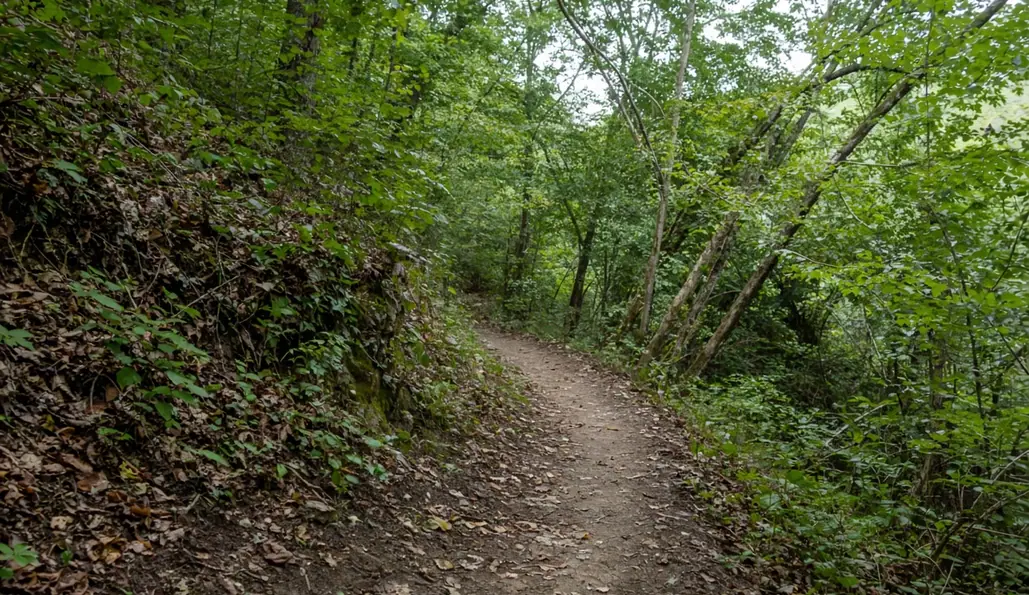
Once your horse stays relaxed in company, you can use its natural gaits to manage the clock through split-speed banking between Wharton State Forest's deep coastal sand and Kittatinny Valley's fractured shale ascents. Whether your mount performs a two-beat diagonal trot, a four-beat lateral stepping pace, or a true two-beat lateral pace, the breed excels at covering flat ground with minimal vertical bounce. A relaxed stepping pace or flat walk covers flat southern fire roads at roughly 5.5 to 7 miles per hour, allowing riders to bank 3 to 4 minutes per mile so the horse can walk technical, rocky northern ascents at around 2.5 miles per hour without falling behind the clock.
When climbing steep, rocky ridges, a lateral pace can leave the horse struggling for lateral stability, so cueing a transition down to a deliberate four-beat walk saves substantial muscular energy. On flat, compacted stretches, letting the horse slip back into an easy stepping pace or ground-covering road trot eats up miles effortlessly. Using a wrist-mounted GPS unit to check split speeds every 2 miles prevents the common mistake of trotting the final 3 miles above 9 miles per hour, which elevates heart rates just before the finish check.
Passing the Pulse, Respiration, and Gait Inspections at Hold Checks
At the pre-ride vetting, mid-ride holds, and final post-ride inspection, veterinary judges evaluate how well your horse is handling the workload. Sanctioned veterinary hold checks typically require the equine heart rate to drop to 60 or 64 beats per minute within 10 to 20 minutes of arriving in camp. Alongside the pulse, judges evaluate respiratory rate and character (checking for shallow inversion or flaring nostrils), skin tenting for hydration, and back or withers soreness. Capillary refill time pressed against the upper gum above the corner incisor must return to pink within 1 to 2 seconds, paired with audible gut motility in all four abdominal quadrants.
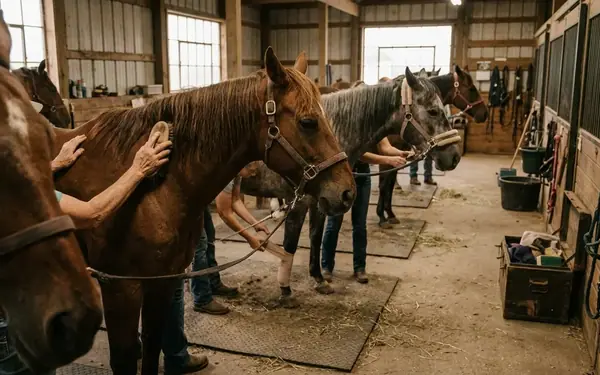
The Standardbred's cardiovascular recovery is remarkably fast, thanks to their deep heart girth and early harness conditioning, provided you keep their adrenaline down in a bustling camp environment. Practicing mock vet checks at home—having strangers palpate their spine, lift their tail, and press a stethoscope behind their left elbow right after a brisk workout—keeps the horse's resting pulse from spiking due to clinic nerves.
The physical jog-out requires specific handler awareness for gaited and pacing lines. Drawing on SPHO-NJ member ride logs, a clear pre-inspection veterinary declaration for lateral four-beat amblers and pacers during the 60-bpm hold check jog-out prevents judges from mistaking a lateral gait for a compensatory pelvic hike. During early sanctioned rides, several four-beat Standardbreds were penalized for gait irregularity during the straight-line trot-out because they shifted between a pace and a trot when led on a loose line. Our riders developed the protocol of notifying the examining veterinarian prior to the presentation that the horse is a natural pacer or ambler, and leading the horse at a crisp, steady 12-to-18-inch lead distance so the horse locks into one consistent rhythm from cone to cone.
Presenting Lateral Gaits Clearly
Always tell the veterinary scribe and judge before you move off: "This horse paces in hand" or "This horse steps a four-beat gait." Practice jogging in hand at home until you know the exact walking speed of your own feet that encourages your horse to stay locked in either a clean diagonal trot or a clean lateral pace without cross-firing at the turnaround cone.
Camp Logistics and Trail Etiquette for Your First Sanctioned Ride
Preparing for a multi-hour competition involves camp management skills that never come up on the racetrack. Standardbreds off the track are used to standing in cross-ties or box stalls, so they must learn to stand quietly tied to a trailer with a hay net while horses pass behind them. Even more critical is water intake and heat management.
Because track-conditioned horses are accustomed to drinking familiar stall water from stationary buckets, riders preparing for multi-hour summer rides had to choose between carrying all water on camp support trailers or flavor-masking buckets weeks in advance. We adopted a two-week pre-ride protocol of adding dark molasses or apple cider vinegar to home water buckets so horses willingly drink unfamiliar campsite well water and tannin-stained Pine Barrens cedar streams. During humid July and August rides where heat indices exceed 85 degrees Fahrenheit, horses require 2 to 4 ounces of balanced electrolyte paste administered 2 hours before the start and at mid-ride holds, strictly after the horse has consumed at least 2 gallons of water. You can review detailed equine exercise physiology and thermoregulation guidelines to structure your cooling routines with scrapers and ice water sponges at hold checks.
Trail Passing and Ribbon Protocols
- Color-Code Your Tail: Tying a red ribbon to the top of the tail signals a horse that may kick if crowded, while a green ribbon warns overtaking riders on narrow ridges that the mount is inexperienced with trail passing.
- Announce Approaches Early: Call out "Passing on your left, two horses" several car lengths back so the rider ahead can collect their reins and prepare their horse before you enter their blind spot.
- Yield on Narrow Ridges: If a faster horse approaches from behind on a single-track climb, find a wide spot in the trail, turn your Standardbred's head slightly toward the trail so they can see the passing horse with both eyes, and halt until the overtaking rider is safely clear.
Stepping onto a 25-mile trail course with an off-track pacer or trotter is a return to the breed's original purpose. Every modern Standardbred carrying these ribbons traces its male-line ancestry back to Hambletonian 10, foaled in 1849—a foundation stallion bred during an era when harness horses were tested by trotting massive cross-country distances between towns under heavy road carts.