Why Retired Standardbred Hooves Need a Reset Before Trail Work
Pulling a retired Standardbred’s racing plates and heading straight onto rocky trails can turn a promising adoption & transition into a painful setback. Thin soles can bruise under concentrated stone pressure; abscesses and persistent soreness can interrupt conditioning. A gradual transition gives the foot time to tolerate the surfaces its new job requires.
Protection, conservative trimming, and comfortable movement form the starting point. Removable composite hoof boots can protect sensitive feet while the heels and frog regain comfortable ground contact. Varied footing can then introduce manageable loading. Permanent mechanical correction should follow an individual clinical need, rather than become an automatic assumption about every former racehorse.
The SPHO-NJ foster-farm transition logs described for 2021–2023 associated immediate trail riding after shoe removal with sub-solar bruising and prompted a decompression period before trail conditioning. That experience gives the community’s breed resources a practical priority: establish comfort before adding distance or rough ground. It does not establish a universal timetable or a barefoot success rate.
Owners should plan around a full hoof-growth cycle, commonly described here as about nine to twelve months, rather than the first visible improvement in heel shape. Previous track wear, metabolic health, and existing damage influence the work ahead.
Comfort Before Mileage
Marked lameness, a stronger digital pulse, unusual hoof heat, or reluctance to turn warrants veterinary assessment. A horse should never have to walk through pain to “toughen” its soles.
How Racing Plates Change Loading in the Standardbred Foot
Harness-racing equipment answers a specific mechanical problem: maintaining an effective stride and traction at speed on a prepared track. Aluminum or steel swedge shoes, toe grabs, rim pads, and wedges change purchase, loading, or hoof orientation. Their effects depend on the complete shoeing package and the horse wearing it. A configuration suited to groomed limestone may behave quite differently on an uneven forest floor.
A long toe moves breakover forward, increasing the leverage that the foot must overcome as the heel lifts. Underrun heels shift support forward beneath the hoof capsule. A recessed frog contributes less direct contact with the ground, while a thin, flat sole offers limited protection against a projecting stone. These features deserve separate assessment; they do not occur in every retired pacer or trotter.
Compare the Bearing Surface
A swedge plate with a rim pad concentrates much of its bearing around the perimeter while providing track-specific traction. A conservatively bevel-trimmed barefoot hoof can distribute contact differently as its wall, sole, frog, and underlying ground interact. Quartz sand at Wharton can conform beneath the foot. Sussex County shale instead presents hard edges and concentrated pressure.
Shoe removal alone cannot make those two conditions equivalent.
Repeatedly shoeing a distorted capsule without addressing toe leverage and heel support may preserve the existing imbalance. However, describing every shoe as a rigid barrier to recovery oversimplifies equine care. Therapeutic support, including glue-on composites, can protect a compromised foot while the veterinarian and farrier manage its underlying condition.
Build Sole Protection Through Trimming, Boots, and Controlled Movement
The transition works best as a sequence of decisions. Calendar stages help organize appointments and equipment, but the horse’s comfort determines progression.
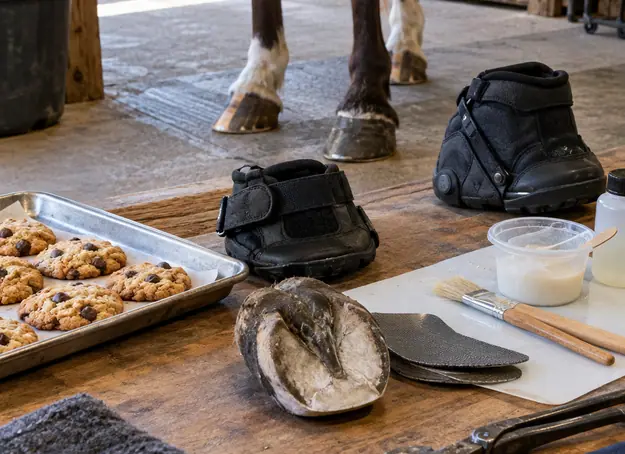
- Establish the starting condition. Before removing the plates, record hoof shape, landing pattern, comfort on familiar footing, and any existing lameness. A veterinarian may recommend radiographs when sole depth, coffin-bone position, or chronic damage needs investigation.
- Use the opening weeks for conservative change. Schedule shoe removal when footing remains reasonably consistent, avoiding a sudden move into frozen ruts, deep mud, or drought-hardened ground. Relieve excessive outer-wall leverage with a conservative bevel or mustang roll. Preserve protective sole rather than carving an artificial concavity.
- Add protected movement as comfort allows. During the following months, introduce short hand-walks on level, predictable surfaces. Firm pasture or a carefully maintained area of small, rounded gravel may suit some horses. Gravel that produces shortened steps or hesitation is too demanding at that stage.
- Fit boots before increasing demands. Properly fitted composite boots with suitable EVA comfort pads can spread pressure and protect sensitive structures. Check for twisting, rubbing, trapped grit, and uneven pad compression. Ridden work should follow comfortable movement and appropriate conditioning.
- Reassess before extending the route. Inspect the white line, frog, wall growth, and landing pattern at regular hoof-care visits. A stretching white line or renewed toe flare calls for a review of trim balance, loading, and possible underlying disease.
Feed the Growing Hoof
A forage-based ration should meet the horse’s energy and mineral needs without unnecessary sugar or starch, especially where metabolic disease is a concern. Balance copper and zinc against the whole ration and forage analysis; avoid assigning supplements from hoof appearance alone. Nutrition can support new horn growth, but it cannot independently correct mechanical separation or treat laminitis.
Provide a dry standing area and keep deep central frog grooves clean. Persistent thrush requires attention because painful frog tissue can discourage comfortable heel loading.
Protect Damaged Soles
Ordinary contraction and lasting internal damage require different plans. Severe pedal osteitis, distal-phalanx remodeling, or persistently inadequate sole depth may justify long-term boots or therapeutic composite shoes. A hoof-growth cycle cannot reverse every structural lesion.
Match Barefoot Conditioning to Pine Barrens Sand and Northern Rock
New Jersey’s trail surfaces create different loading problems. In Wharton and Brendan T. Byrne State Forests, quartz sand and pine duff can conform beneath the sole and fill the collateral grooves. That contact can offer more distributed support than a hard, projecting stone. Sand also abrades horn, and deep going increases muscular effort, so an early conditioning route should remain short and manageable.
The Highlands and Kittatinny terrain introduce traprock, fractured stone, glacial boulders, and shale. A hoof that travels comfortably on a sandy track may still need boots there. A sloping slab also tests balance and traction differently from loose aggregate.
Check Readiness on the Ground
Before attempting unbooted rocky work, assess these features together:
- A compact white line: little visible stretching or separation, assessed alongside the horse’s health and trim history.
- A comfortable landing: consistent movement without shortened steps, guarded turns, or repeated avoidance of the surface.
- A substantial, healthy frog: broad tissue without painful deep fissures or active thrush.
- Protective sole development: adequate sole depth and functional concavity, assessed professionally when appearance leaves uncertainty.
- Recovery after work: no new tenderness, increased digital pulse, or deterioration in movement later that day or the next.
A heel-first landing can contribute useful information, but speed, slope, and surface affect landing patterns. Visible concavity and dirt shedding cannot measure sole thickness. Boots remain useful equipment even after successful barefoot conditioning, particularly when a route becomes sharper or longer than the horse’s usual work.
For SPHO-NJ member programs and informal riding groups, sharing accurate footing descriptions helps owners select suitable outings. “Firm cinder with a rocky climb” offers more useful preparation than simply calling a route easy.
From Track Plates to a Comfortable Paulinskill Trail Ride
Across a hoof-growth cycle, improved toe management and healthier heel support can produce an easier breakover and more confident movement. The useful comparison is the same horse on comparable footing, with attention to stride, turning, and recovery. Wet leaves, timber bridges, and damp shale still demand deliberate riding; bare horn does not guarantee grip.
Picture an SPHO-NJ rider schooling her retired pacer gelding beside the Paulinskill Valley Trail in Sussex County. At the edge of the cinder bed, she pauses before a familiar shale-strewn climb. His boots stay clipped to the saddle for the return. He places a forefoot, shifts his weight, and steps upward without shortening his stride. Against the damp rock, his unshod hooves make a low, hollow thud.