The 180-Day Protocol for Resolving Track-Induced Hyper-Vigilance
The gelding arrived straight from the New Jersey racing circuit, stepped off the trailer, and immediately demonstrated the psychological toll of his previous career. When tied to a standard wash rack for a basic grooming session, he began pacing relentlessly. His head carriage elevated to an unnatural height, his eyes widened, and his entire musculature locked into a rigid flight response. Observing this intense reaction made one point clear: introducing saddle work at this stage would only compound his existing anxiety and risk catastrophic failure.
Track-induced anxiety in Standardbreds manifests as a learned hyper-vigilance. These horses spend years conditioned to react to specific auditory and visual cues with explosive forward momentum. To understand the baseline of this particular gelding, resting heart rate observations were taken over the first 14 days of his arrival. The data confirmed a state of chronic stress, with his resting rate consistently elevated long after the immediate stimulus of the trailer ride had passed.
This initial assessment led to a strict 180-day transition protocol. The premise of this six-month timeline is firm: a successful transition requires dismantling track-specific associations entirely before introducing traditional saddle training. Attempting to bypass this psychological reset guarantees a dangerous, unpredictable mount. The focus must remain entirely on ground-level reprogramming, allowing the horse's nervous system to return to a neutral state.
Isolating Environmental Stressors in the Round Pen
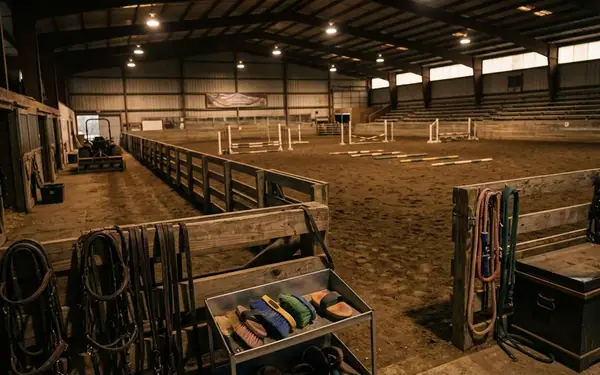
Addressing the gelding's anxiety required isolating the exact environmental stressors triggering his flight response. General nervousness is a vague diagnosis; effective intervention demands specificity. The handler moved the horse to a controlled round pen to systematically introduce different auditory and visual stimuli, carefully logging which sounds induced the pacing behavior.
The most severe reaction occurred during the introduction of one sound: the crunching of 3/4-inch crushed stone. This noise triggered a gravel-crunch sulky mimicry response, instantly transporting the gelding back to the track environment. He associated the sound directly behind him with the impending pressure of a race. Similarly, sudden movement within the 10-to-4 o'clock visual blind spot caused immediate panic. Standardbreds often race with specialized equipment that alters their field of vision, making unexpected movement in these blind areas deeply unsettling.
These reactions need to be understood in context. They are trained responses for harness racing, deeply ingrained survival mechanisms rather than inherent behavioral flaws. The horse is doing exactly what he was taught to do under harness. Recognizing this distinction shifts the training approach from punishment to patient desensitization.
Separation from the herd also proved to be a significant trigger. Racehorses live highly regimented, communal lives. Removing the gelding from the sightline of other horses spiked his anxiety, further complicating the initial handling sessions.
Standardbred Track-Trigger Identification Checklist
- Assess reaction to gravel or crushed stone sounds directly behind the horse.
- Observe head carriage when separated from the herd by approximately 50 feet.
- Test response to sudden movements in the rear visual blind spot (10-to-4 o'clock).
Adapting Pressure-and-Release for the Harness Horse
Standard riding horse techniques frequently fail when applied to former harness racers. The handler initially attempted standard direct-line halter pressure to ask for a simple backup. The pacer instinctively leaned heavily into the pressure, bracing his neck and shoulders as if pulling a cart. This bracing reflex is a fundamental requirement for a successful racing career, making direct-line pressure counterproductive for groundwork.
The handler switched to lateral flexion. Instead of pulling backward, the handler asked the horse to yield its hindquarters one step at a time. This lateral movement disengages the bracing reflex, forcing the horse to cross its hind legs and physically preventing it from leaning into the halter. Establishing the correct lateral flexion release threshold for harness racers requires impeccable timing. The handler utilized a strict 3-second release window, dropping all pressure the instant the gelding yielded his hindquarters, thereby reinforcing the desired compliance.
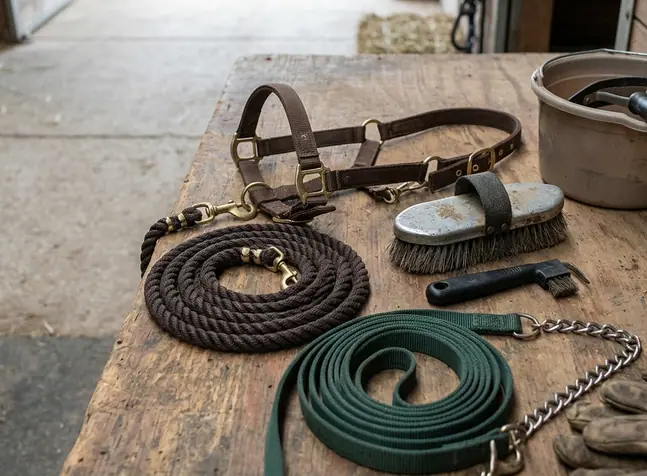
Auditory and visual desensitization ran parallel to the flexion work. The handler introduced an 8x10 heavy-duty poly tarp to the arena. Initially, the tarp was simply placed in the center of the workspace, allowing the gelding to investigate it at his own pace. Over several weeks, the tarp was dragged, rustled, and eventually draped over the horse's back. This process required a sound understanding of equine behavior and pressure-release training principles, ensuring the horse learned to stand quietly rather than flee from the unfamiliar noise and texture.
Every chosen method deliberately avoided triggering the horse's forward-drive instinct. By focusing on lateral movement and gradual sensory exposure, the groundwork phase slowly dismantled the gelding's association between pressure and panic.
Navigating the Week Seven Saddling Setback
Desensitization is a complex, uneven process. Certain track memories may never be fully erased, requiring lifelong management by the rider. Acknowledging these limitations prevents dangerous overconfidence during the transition phase.
Drawing on veterinary evaluations of retired racing stock, behavioral desensitization protocols assume the absence of acute physical pain and will fail to resolve pacing or bolting behaviors rooted in undiagnosed conditions like kissing spine or active suspensory ligament injuries. Once physical pain was definitively ruled out for this gelding, the focus remained entirely on psychological rehabilitation.
Despite early progress, a significant setback occurred during Week 7. The handler attempted a premature saddle introduction. The sudden pressure of the girth, combined with the weight of the saddle, overwhelmed the gelding's newly established coping mechanisms. He bolted, regressing immediately to his track-induced panic state. This failure highlighted the danger of adhering to a rigid schedule rather than reading the horse's stress signals.
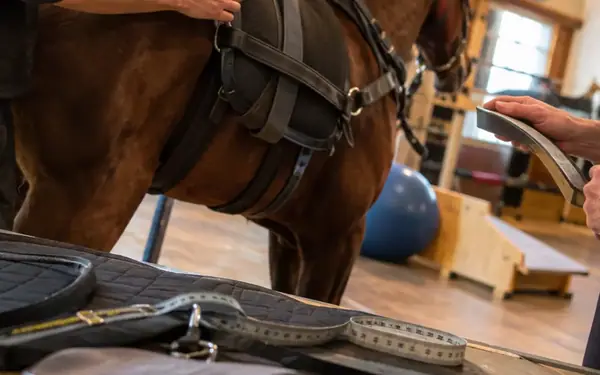
The training timeline was completely restructured in response. The saddle was removed from the equation for an additional 28-day delay. During this period, the handler focused entirely on bareback pad desensitization. The pad provided the sensation of weight and a soft girth without the rigid structure of a saddle tree. This adjustment rebuilt the gelding's trust, proving that patience and flexibility are far more valuable than arbitrary training deadlines.
Tracking Posture Changes and Water Crossing Success
Evaluating the success of the intervention relies on concrete, qualitative behavioral metrics. The transformation of the gelding became evident through specific, observable changes in his daily posture and reactions.
The first major milestone occurred on the ground. After months of pacing and anxiety, the gelding finally achieved the ability to stand quietly at a blocker tie ring for 20 consecutive minutes. His physical posture transformed; he began consistently lowering the poll below the withers for sustained periods. This lowered head carriage is a physiological indicator of a relaxed nervous system, a stark contrast to the elevated, rigid neck he displayed upon arrival.
Trail confidence provided another test of the 180-day protocol. During early trail exposures, the gelding's instinct was to rush blindly through obstacles, relying on momentum to escape perceived threats. At a small water crossing, instead of panicking and leaping over the water, the horse stopped, lowered his head, and chose to investigate the water crossing with his nose. He processed the obstacle calmly before stepping through it deliberately.
This deliberate investigation marked a complete departure from his initial anxious state. The new baseline behavior on the trail demonstrated a horse that had learned to think through challenges rather than react with blind flight. The groundwork had changed his response to environmental stressors.
Prioritizing Mental Relaxation Over Physical Exhaustion
A common, deeply flawed approach to retraining ex-racehorses involves attempting to lunge the energy out of them before a ride. Comparing the gelding's erratic behavior on days he was lunged heavily versus days he was asked to perform slow, deliberate obstacle navigation showed a clear difference. Heavy lunging only increased his fitness and elevated his adrenaline, mimicking the physical exertion of the track and heightening his anxiety.
Owners transitioning retired Standardbreds must prioritize mental relaxation over physical exhaustion. Running a horse in circles until it is tired does not teach it how to process fear; it merely creates a fatigued, anxious animal that will still bolt when its energy reserves recover.
You must establish a calm mind on the ground before you can ever achieve a safe ride in the saddle. Demand quiet, deliberate movement during every interaction, enforce lateral flexion to disengage the bracing reflex, and refuse to mount until the horse's poll drops below its withers in genuine relaxation.