From a Racing Mile to Jersey Jewel’s First 25-Mile Ride
Standardbred harness races cover a single mile at peak anaerobic exertion, whereas a limited-distance endurance ride demands 25 miles of sustained, low-heart-rate aerobic output.
That contrast frames Jersey Jewel’s transition, although racing also draws substantially on aerobic metabolism. The practical difference lay in how she spent her energy: accelerate and sustain racing speed, or settle into a rhythm she could carry along the trail and recover from at veterinary checks.
The supplied account of her 2016 retraining in central New Jersey gives a clear verdict. Slowing her habitual trot, extending continuous easy work, and monitoring recovery mattered more than developing speed. Her ground-covering road trot already supplied plenty of that.
I would put rhythm control first when assessing a similar prospect. A horse that accelerates whenever companions move ahead can spend its reserves long before tired legs become obvious.
Jersey Jewel’s conditioning produced three useful outcomes:
- Repeatable recovery: she consistently reached a pulse of 60 beats per minute or lower within 12 minutes of stopping during the reported conditioning period.
- A quieter way of travelling: her training shifted toward a relaxed trail carriage instead of the braced, forward-driving response associated with racing.
- No reported soft-tissue swelling: the account recorded none during the 24-week transition. That observation supports the program’s conservative approach, but does not establish that every tissue remained injury-free.
A 25-mile event belongs to the limited-distance category within endurance riding. For a retired Standardbred, it offers a substantial new job: carrying a rider over changing footing, settling among unfamiliar horses, and arriving at inspections ready to recover.
Jersey Jewel’s Quiet Breathing Hid an Excited Pulse
At rest in her stall, Jersey Jewel’s recorded pulse was 34 beats per minute. Jogging in company on an open forest road pushed it to 165, even while her breathing looked comparatively calm. The onboard heart-rate monitor exposed effort that a glance at her nostrils could miss.
That finding changed the question. Could she trot farther? Probably. Could she trot economically while other horses moved around her? That required deliberate retraining.
Separate Racing Fitness From Trail Readiness
Harness racing develops substantial cardiovascular capacity and an effective response to intense exercise. Horses can also mobilize red blood cells through splenic contraction during exertion. Neither feature, by itself, establishes readiness to carry a rider over a long trail course.
Jersey Jewel brought a familiar racing response into her new work: contact on the reins and an invitation to trot could produce leaning and acceleration. Mental anticipation then added to the physical workload. Her early evaluations therefore needed to distinguish excitement, excessive speed, discomfort, and ordinary exercise effort rather than treating every elevated reading as poor fitness.
Establish the Whole-Horse Starting Point
Before increasing distance, the veterinary assessment needed to cover resting pulse, gut sounds, hydration indicators, soundness, and limb symmetry. These observations create a baseline against which later changes become meaningful.
Her reported orthopedic findings included uneven muscular development around the left gluteal and stifle regions and a flatter left-front hoof wall. Her history of counterclockwise track work provided relevant context; it did not prove the cause of every asymmetry.
For adoption & transition planning, this distinction matters. “Track fit” describes previous work. A useful handover also records current comfort, handling responses, hoof condition, and experience under saddle. Those details help an adopter select the next task rather than guess from the horse’s racing history.
Six Months of Slower Trotting and Longer Trail Work
Jersey Jewel’s schedule progressed through three phases. Treat the calendar as her case timeline, with advancement tied to recovery, soundness, and behaviour. Deep sand, hills, and consecutive riding days all increase the workload, even when the distance looks modest.
Months One and Two: Make an Easy Rhythm Available
Early sessions combined brisk walking with short intervals of slow posting trot. The account describes walking sessions of 45–60 minutes and five-minute trot intervals, with monitored heart rates generally held between 95 and 115 beats per minute.
New Jersey sand trails and slight inclines supplied changing demands. Deep sand also increases muscular and tendon loading, so its presence calls for shorter, more cautious work rather than automatic credit as conditioning terrain. Consistent, recoverable exercise gives cardiovascular fitness and supporting tissues time to adapt; a quiet pulse alone cannot confirm tendon or bone readiness.
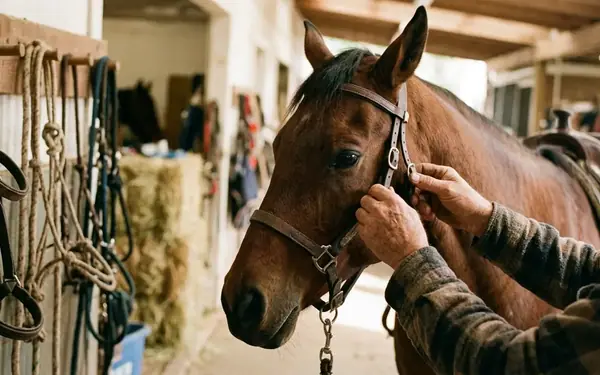
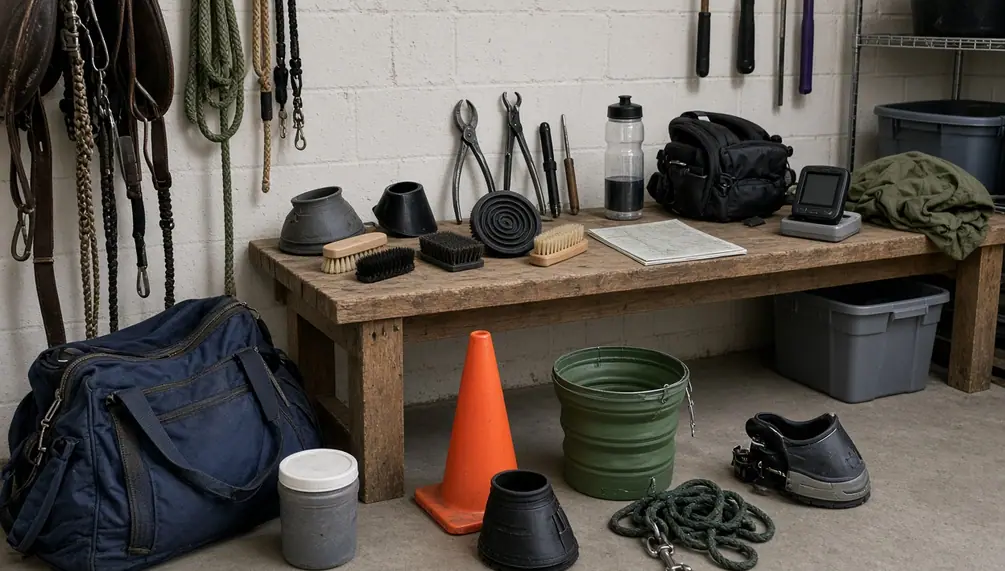
One equipment experiment proved unhelpful. After three rides in a stronger mechanical hackamore, her handler abandoned it because nose pressure encouraged her to brace. A mild loose-ring snaffle and schooling for a slower response better served the task.
The transferable lesson is about the response, rather than the bit model. When the horse surges, restore balance and attention on secure footing. Avoid turning speed control into a pulling contest or asking for tight circles in deep sand.
Months Three and Four: Extend the Work Without Chasing Pace
The next phase increased continuous saddle time to 90–135 minutes and introduced longer trotting loops over rolling terrain. The account records working speeds of 8–10 mph on loops of 8–10 miles.
Those are observations from this horse, not entry requirements for another Standardbred.
A relaxed neck, manageable contact, consistent recovery, and comfortable movement after work carry more weight than matching a speed display. Without exercise testing, a rider cannot identify an individual horse’s anaerobic threshold precisely from a single heart-rate number. Use the monitor alongside behaviour, footing, weather, and veterinary assessment.
Months Five and Six: Rehearse the Ride’s Demands
Later conditioning included a 14-mile Saturday loop followed by an 11-mile Sunday ride, plus a practiced 40-minute rest-and-forage hold. Splitting work across consecutive days tested recovery between outings while introducing the routine of stopping, eating, and setting off again.
Consecutive days belong late in a progression. Check appetite, leg filling, hoof comfort, willingness to move, and the following morning’s condition before asking for the second ride. A horse that looks flat or moves unevenly needs reassessment, not a completed training box.
Member programs can help owners rehearse these routines through quiet group outings and organized rest stops. The most useful companion horse holds a steady pace without turning every departure into a race.
Teach the Veterinary Hold Before Entering the Ride
At an endurance veterinary check, officials assess whether the horse can safely continue. Pulse recovery forms part of that decision alongside soundness, hydration, gut activity, and overall presentation. The event’s published rules determine its pulse criterion, recovery window, and hold procedure.
Jersey Jewel’s conditioning account used a recovery target of 60 beats per minute or below. Owners should check the actual ride requirements rather than assume that one threshold governs every event.
Use the Monitor to Find Patterns
The rider paired an equine heart-rate monitor with stethoscope checks. Continuous readings helped identify excitement around company and stopping places; manual checks provided another way to assess pulse when electrode contact or movement affected the display.
A useful training record includes the work completed, footing, weather, arrival pulse, time to the chosen recovery criterion, and the horse’s behaviour. Record drinking, eating, and any uneven steps too. Compare similar sessions before treating a faster recovery as a fitness gain.
The Cardiac Recovery Index adds a controlled trot-out between pulse assessments. Consistent timing and accurate counting matter, and the examining veterinarian interprets the response with the rest of the examination. An increased post-trot pulse can prompt closer assessment; it cannot, on its own, identify pain or metabolic fatigue.
Make Stopping Feel Familiar
Home loops ended beside a prepared water tub and hay net. Jersey Jewel could begin a familiar drinking-and-foraging routine rather than remain keyed up while equipment appeared around her.
- Set up the stop: have water, forage, cooling supplies, and checking equipment ready before riding out.
- Reduce the workload: approach quietly, dismount, and manage tack promptly to support cooling.
- Offer water and appropriate forage: observe willingness to drink and eat without forcing either.
- Check and record recovery: assess pulse and the horse’s overall condition before considering further work.
Humid Trails Change Pace
New Jersey heat and humidity can slow cooling, especially on demanding sand. Reduce effort early and plan access to water. Electrolyte use needs an individual plan that accounts for the product, workload, forage, and drinking; automatically doubling a dose can create additional risk.
Practicing the hold also reveals handling gaps. A horse that cannot stand for a stethoscope check or trot quietly in hand needs that preparation before facing the bustle of events & shows or a competitive ride camp.
What Jersey Jewel’s Finish Means for Your Standardbred
Jersey Jewel completed her debut 25-mile course in a reported moving time of three hours and 48 minutes. At the hold after 15 miles, her pulse reached 52 beats per minute within nine minutes. The finishing account records A-grade gut motility in all four quadrants and a sound final presentation.
Those details make recovery and comfort central to the result. Moving time excludes the hold and should not become a target for another horse’s first attempt.
Check the Feet and Saddle as Fitness Changes
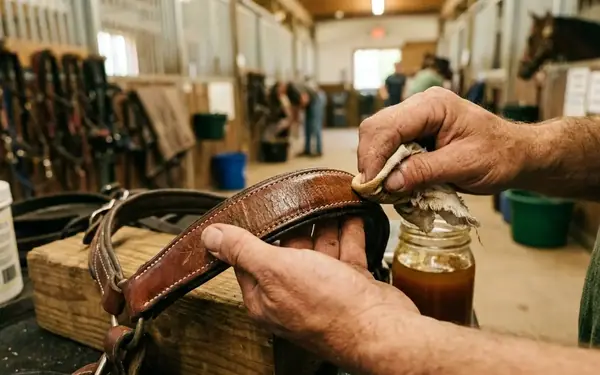
Rocky northern New Jersey trails demanded different hoof protection from her former track surface. Her case describes a change from track plates to composite shoes with pour-in pads. The useful takeaway is the reassessment of terrain and protection, rather than copying her shoe package or hoof angles.
Saddle fit changed too. Between the middle months of conditioning, her rider noticed dry areas behind the shoulder after a longer loop and changed from the original saddle to a wider, flatter tree. Dry spots alone do not diagnose saddle pressure, but they justify checking fit alongside tenderness, movement, sweat patterns, and the rider’s balance.
Equine care has to keep pace with the new job. Carrying weight over uneven ground asks different questions of the back and feet than pulling a sulky.
Before You Enter a 25-Mile Ride
- Controllable rhythm: your horse maintains an economical trot when companions leave or pass, without sustained bracing or escalating excitement.
- Repeatable recovery: comparable training outings show dependable pulse recovery and comfortable behaviour at stops.
- Comfort after distance: legs, feet, and back remain comfortable after longer work and the following morning.
- Reliable holds: your horse accepts examination, drinks and eats willingly, and trots out quietly in hand.
- Suitable equipment: hoof protection and saddle fit match the current horse and intended terrain.
- A workable entry plan: you understand the event rules, cooling arrangements, water access, and reasons to withdraw.
Use these observations to guide the next training decision and keep breed resources focused on the horse in front of you.
Will you enter the next 25-mile ride because your Standardbred can cover the distance, or wait until your training record shows that the horse can recover comfortably as well?